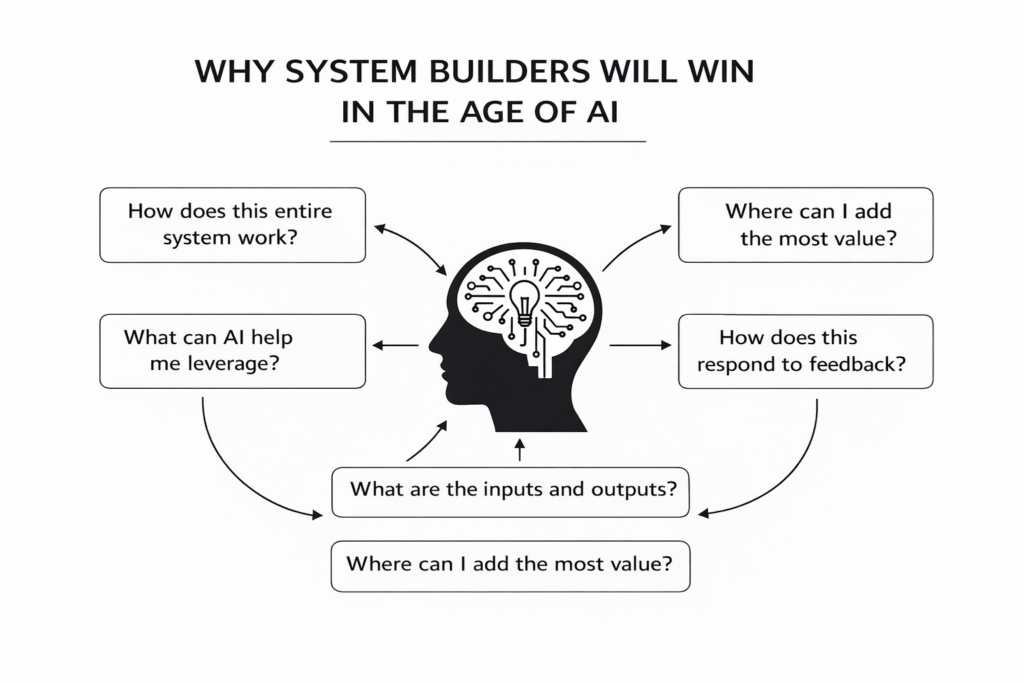
This week I found myself thinking about systems thinking, architect-framed vision, and top-level engineering. Not just in the traditional sense, but in how people naturally build and understand complex things.
A system is anything made up of multiple components working together toward an outcome.
Outside of formal engineering or architecture, systems thinkers exist everywhere. The fashion designer who imagines a garment, sketches the vision, selects fabric, thread, and machinery, then brings it to life on a runway. The chef who understands flavor as chemistry, presentation as psychology, and timing as execution. The florist who understands soil, seasons, and species to assemble an arrangement for a wedding that has not happened yet.
These are all system builders.
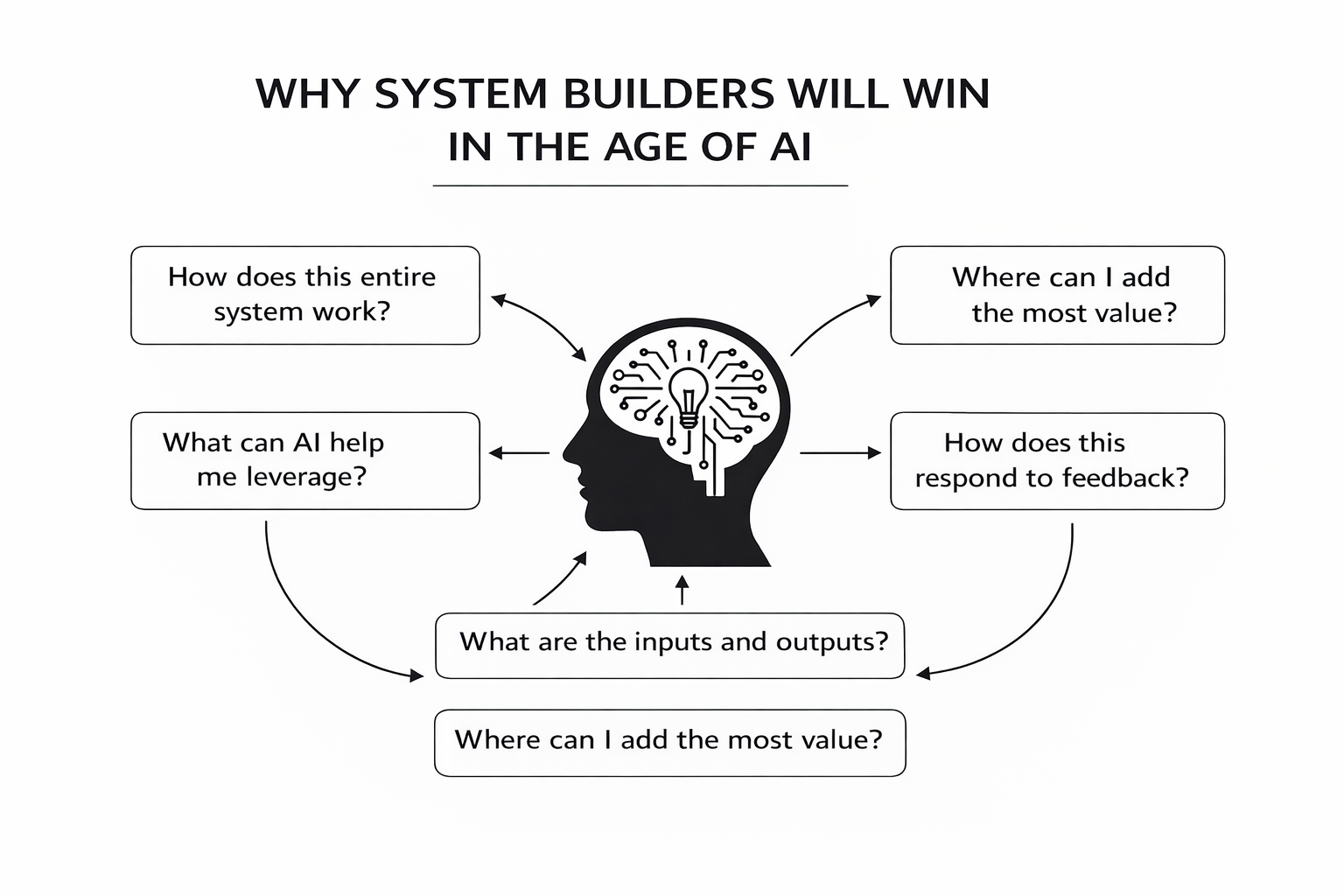
Systems thinking is the ability to take a thing, break it apart in your mind, understand how the components interact, then reconstruct it in the real world with intention. It requires understanding both the parts and the desired outcome. Vision without structure fails. Structure without vision stagnates.
Many people do this every day without realizing it. Because there is no pause to name the skill, no framework to refine it, they miss opportunities to improve it, scale it, and turn it into something they can leverage.
That is the loss.
The Website That Made Me See Systems Clearly
This week, that realization hit me while reviewing my own website. The one you are reading now.
Originally, I built it as a digital home for my TikTok audience. It was a creative outlet, not a conversion machine. At the time, that made sense. But formal education in Information Technology combined with a life moment that required me to become my own boss forced a pivot.
This site could no longer just exist. It had to work.
I have not yet formally introduced myself, my long-term goals, or what I am building beyond helping you leverage AI for yourself, your family, your community, and your future self. Part of this process is thinking publicly and building publicly. Training discipline. Developing clarity. Sharpening execution.
That requires ritual. It requires commitment. It requires shutting up and doing the work.
When I reassessed my website through a systems lens, I saw it clearly. Inputs. Outputs. Friction. Waste. It was a system designed for expression, not growth or income. So I redesigned the system.
That led me back to AI.
AI as a Force Multiplier for System Thinkers
AI has critics, and some of that criticism is valid. Used poorly, without understanding, it can dull thinking. Research already shows that passive reliance reduces cognitive engagement.
Used correctly, it does the opposite.
AI is a force multiplier for system thinkers.
For people who can see the whole, understand dependencies, and design flows, AI accelerates execution. It shortens feedback loops. It allows individuals to build at speeds that once required teams.
I am a system builder in progress. Still refining. Still learning. But in working with AI, I have seen its real value. Not as a replacement for thought, but as leverage for building complete things.
This website is one of those things.
And there are more coming.
How to Identify Yourself as a System Builder
You might already be a system builder and not know it.
If you naturally break problems down instead of reacting to them, that is a signal. If you think in terms of inputs and outputs, trade-offs, constraints, and second-order effects, that is a signal. If you find yourself asking, “What has to be true for this to work?” you are already operating in systems mode.
System builders are not defined by job titles. They are defined by how they think:
- They see outcomes first, then work backward
- They are comfortable sitting in ambiguity long enough to design structure
- They are less interested in shortcuts and more interested in repeatable processes
The shift starts when you stop asking only “What do I do next?” and start asking “What am I actually building?”
Developing the Systems Mindset Incrementally
This mindset is not something you wake up with fully formed. It is trained.
Start small. Pick one area of your life or work and map it as a system:
- Identify the goal
- Identify the components
- Identify what is within your control and what is not
- Identify where friction shows up repeatedly
Then build the habit of reflection. After any outcome, good or bad, ask what part of the system produced that result. Not who. Not how you felt. What failed or succeeded structurally.
Over time, this rewires how you approach problems. You stop personalizing failure and start diagnosing design.
Where AI Fits In
This is where AI becomes dangerous or powerful, depending on how you use it.
If you treat AI as an answer machine, it weakens you. If you treat it as a thinking partner, it strengthens you.
Studies have already shown that uncritical reliance on generative AI can reduce cognitive effort and independent reasoning. That risk is real. But those same tools, when used actively, can improve learning speed, pattern recognition, and iteration.
The difference is intent.
If you have never used AI: Start by using it to clarify your thinking. Ask it to explain concepts. Then ask it to quiz you. Then ask it to challenge your understanding. Make it a feedback loop, not a crutch.
If you have used AI casually: Move past prompts and into systems. Ask it to map an entire process. Ask it to identify dependencies, bottlenecks, and failure points. Ask it what questions you are not asking.
Leveraging AI as a Builder
If you want to learn something new, use AI to teach you, test you, and expose gaps in your understanding.
If you want to start something, do not ask AI for ideas first. Ask it to help you think through the full architecture of the outcome you want:
- The inputs required
- The resources needed
- The risks involved
- The feedback loops that will keep it alive
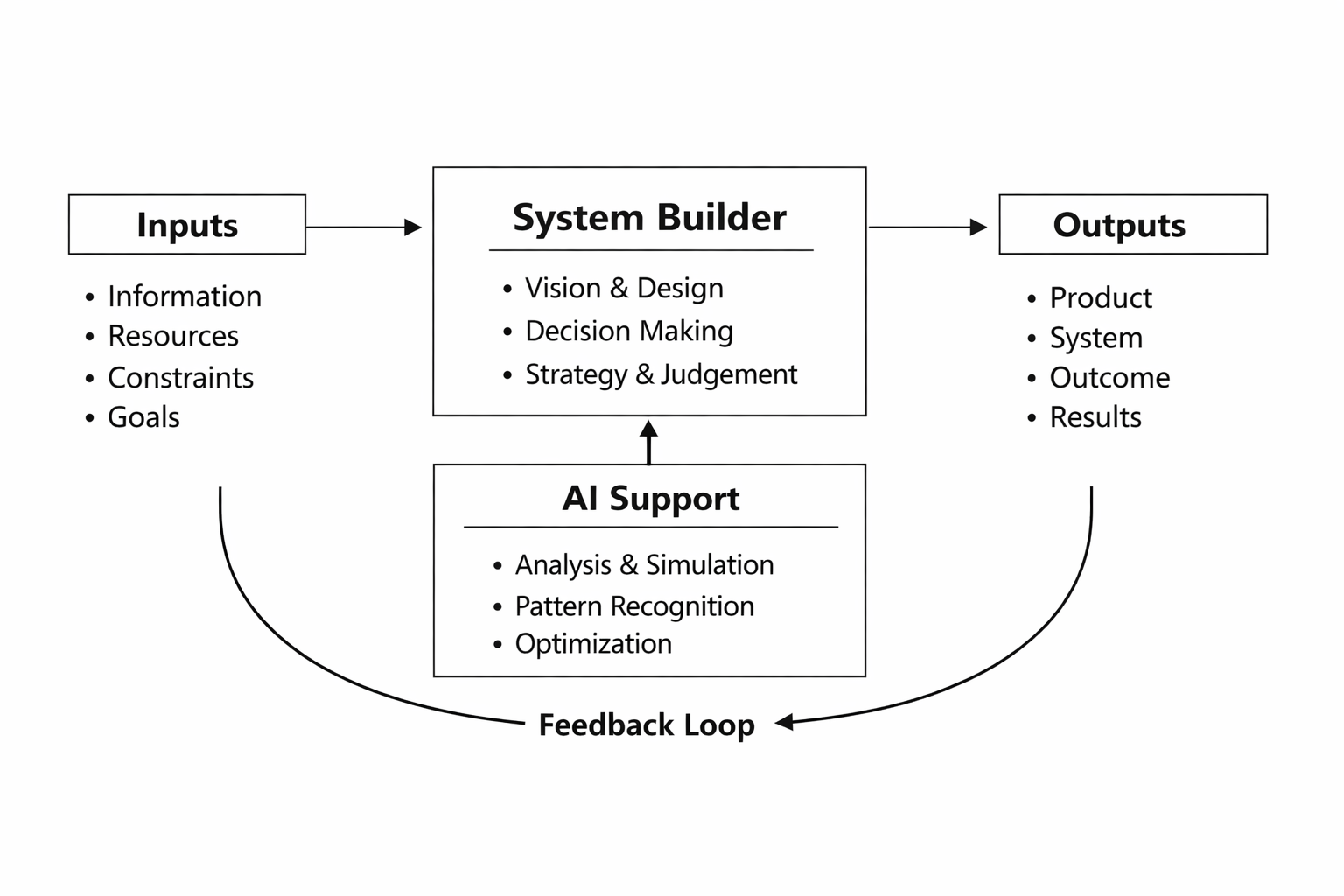
Used this way, AI does not replace thinking. It amplifies it.
That is why this moment matters. For builders. For people willing to think in systems. For those who want to design outcomes instead of reacting to circumstances.
This website is an experiment in that process. A system being refined in public.
More systems are coming.
Forward Upward Onward
Mstimaj
Join the Conversation
Share your thoughts and connect with other readers