What Is RAG? Letting AI Take the Open-Book Exam
A plain-language visual explainer on retrieval augmented generation: why models cannot know your documents, how the right pages get found and handed over, and why the answer is only as good as the library.
A model sitting on its own is taking a closed-book exam. It answers from memory, and when memory runs out it guesses fluently. RAG is the change that hands it the book first. It is the reason an assistant can answer questions about your own documents, your own policies, and things that happened after it finished training.
What Is RAG? Letting AI Take the Open-Book Exam
A plain-language visual explainer on retrieval augmented generation: why models cannot know your documents, how the right pages get found and handed over, and why the answer is only as good as the library.
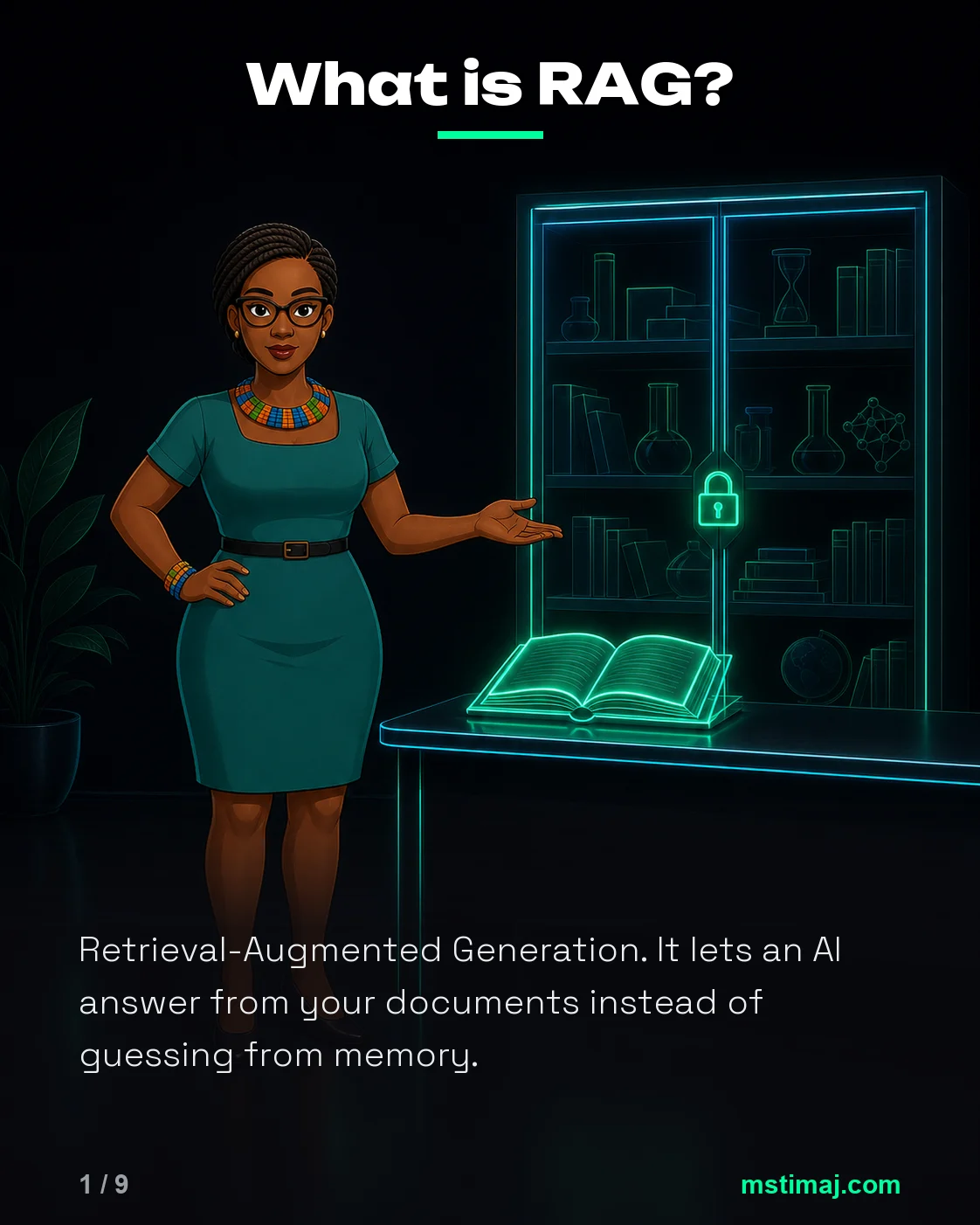
What is RAG?
Retrieval augmented generation is how an AI answers from your documents instead of guessing from memory. Seven steps, in plain language.
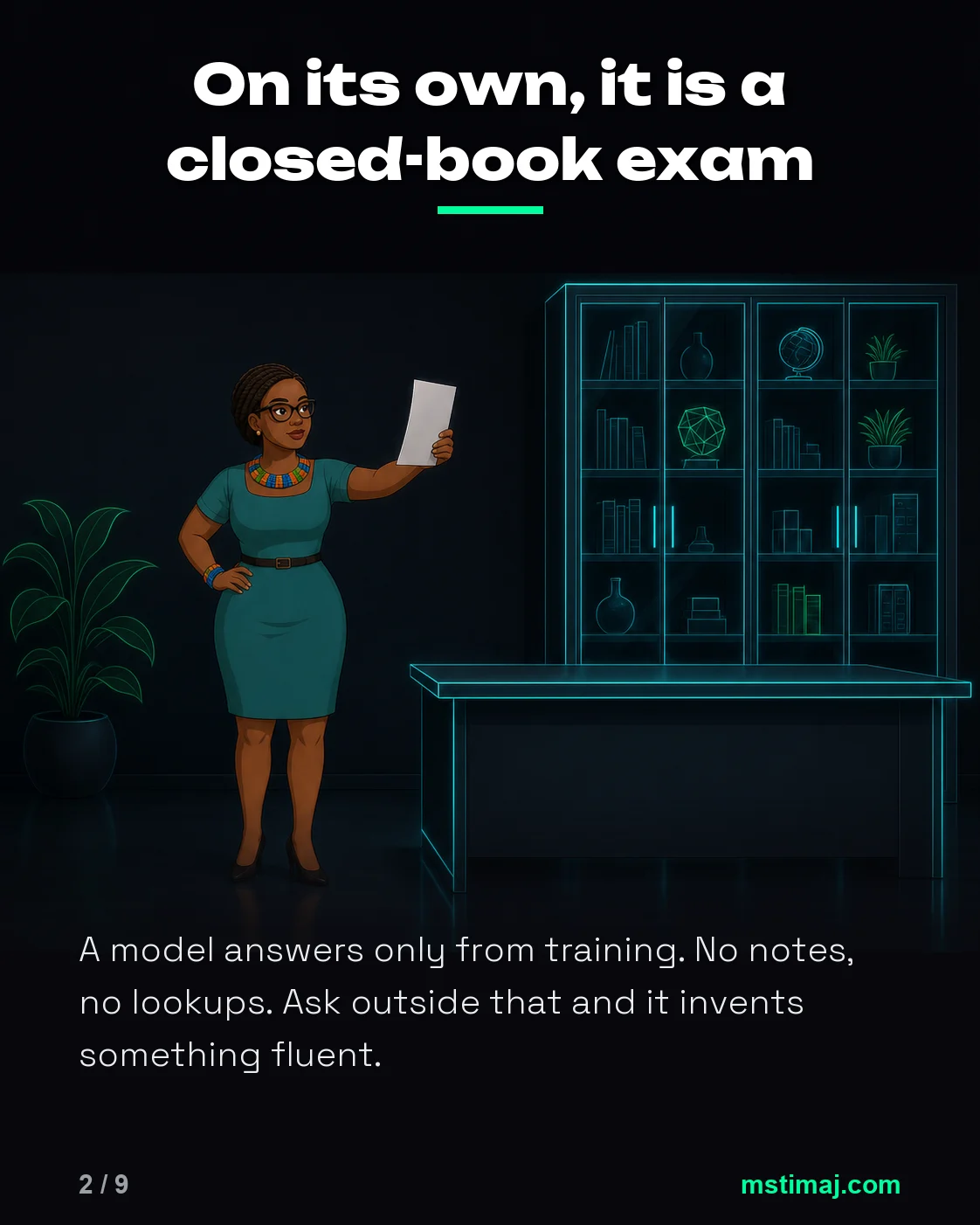
On its own, it is a closed-book exam
A model answers from what it absorbed during training and nothing else. No notes, no lookups. When the question lands outside what it studied, it does not go quiet. It writes something fluent and plausible anyway.
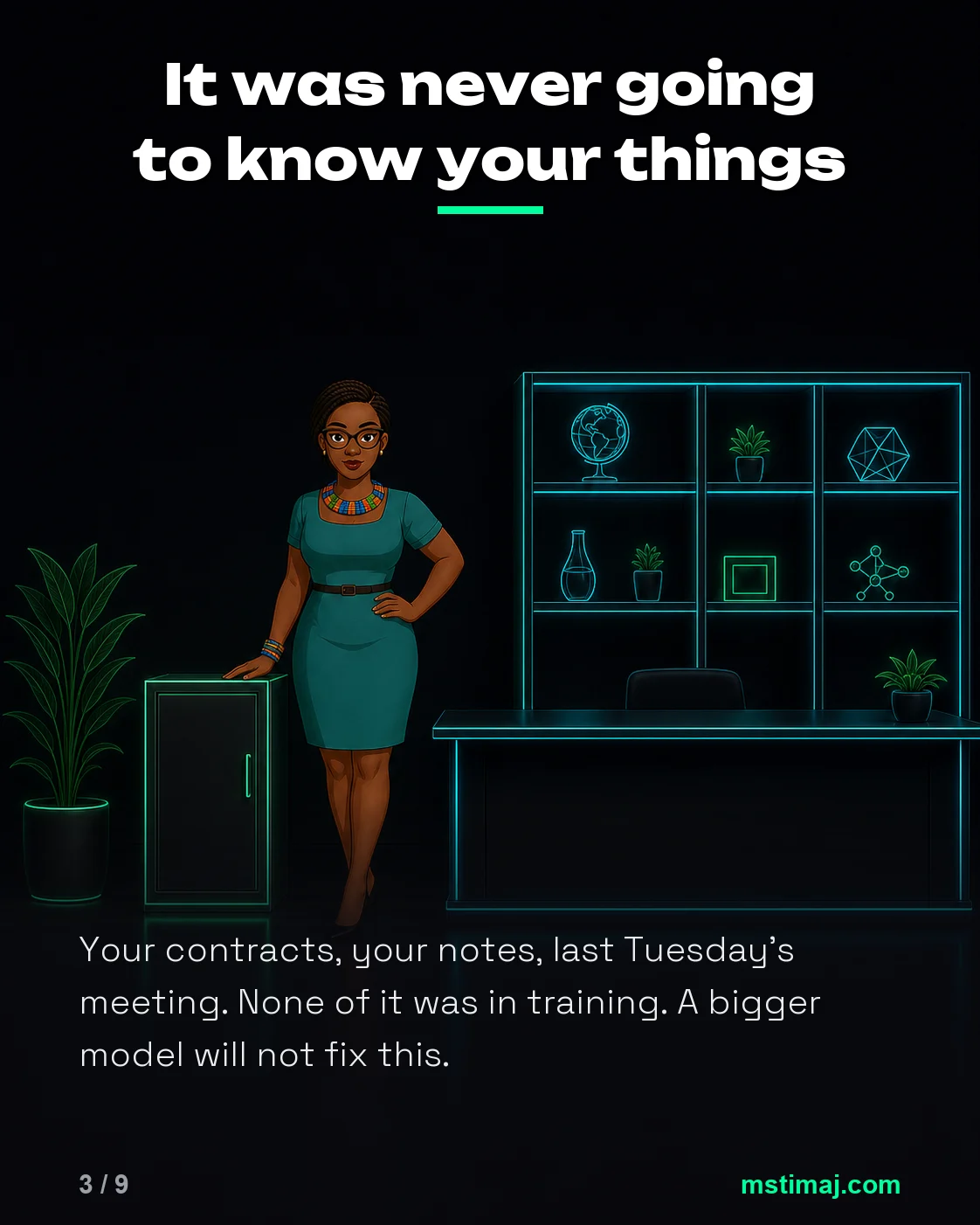
It was never going to know your things
Your contracts, your client notes, your internal policies, last Tuesday's meeting. None of that was in the training data and none of it ever will be. This is not a gap the next bigger model closes.
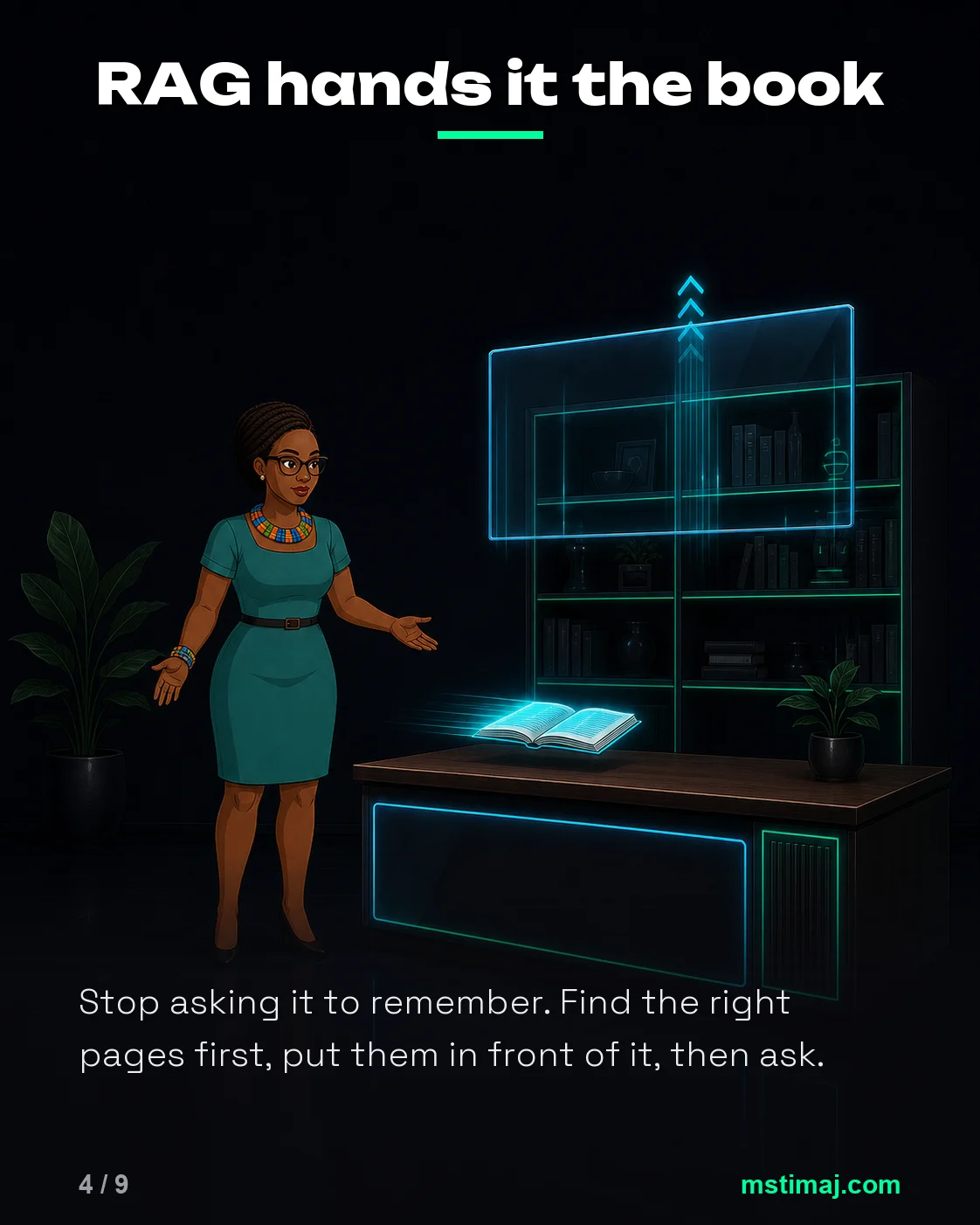
RAG hands it the book
Instead of asking the model to remember, you let it look things up. Find the relevant pages first, put them in front of the model, then ask the question. Closed book becomes open book.
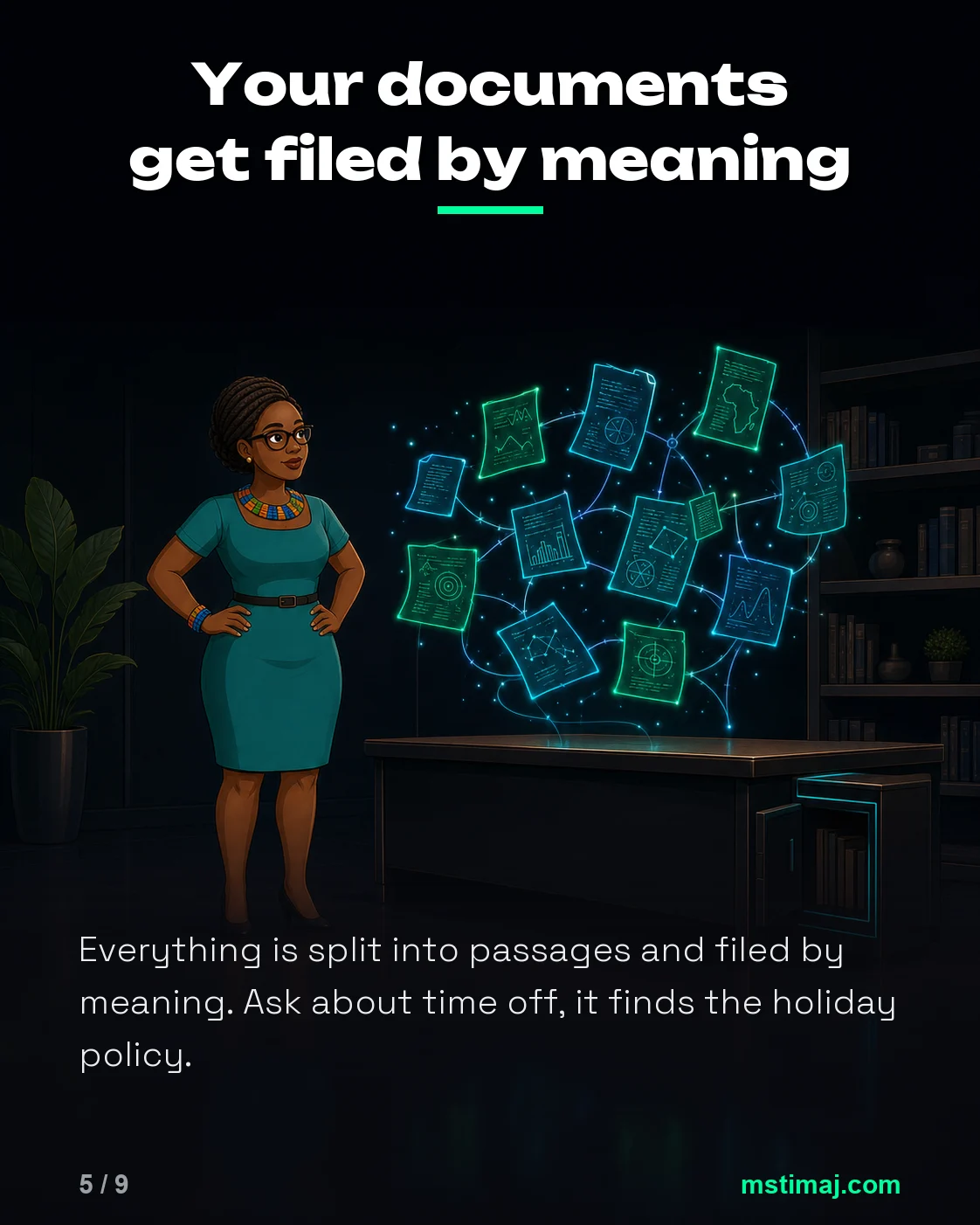
Your documents get filed by meaning
First everything is broken into passages and filed by what it is about, not by keyword. That way a question about time off still finds the page headed holiday policy, even though the words do not match.
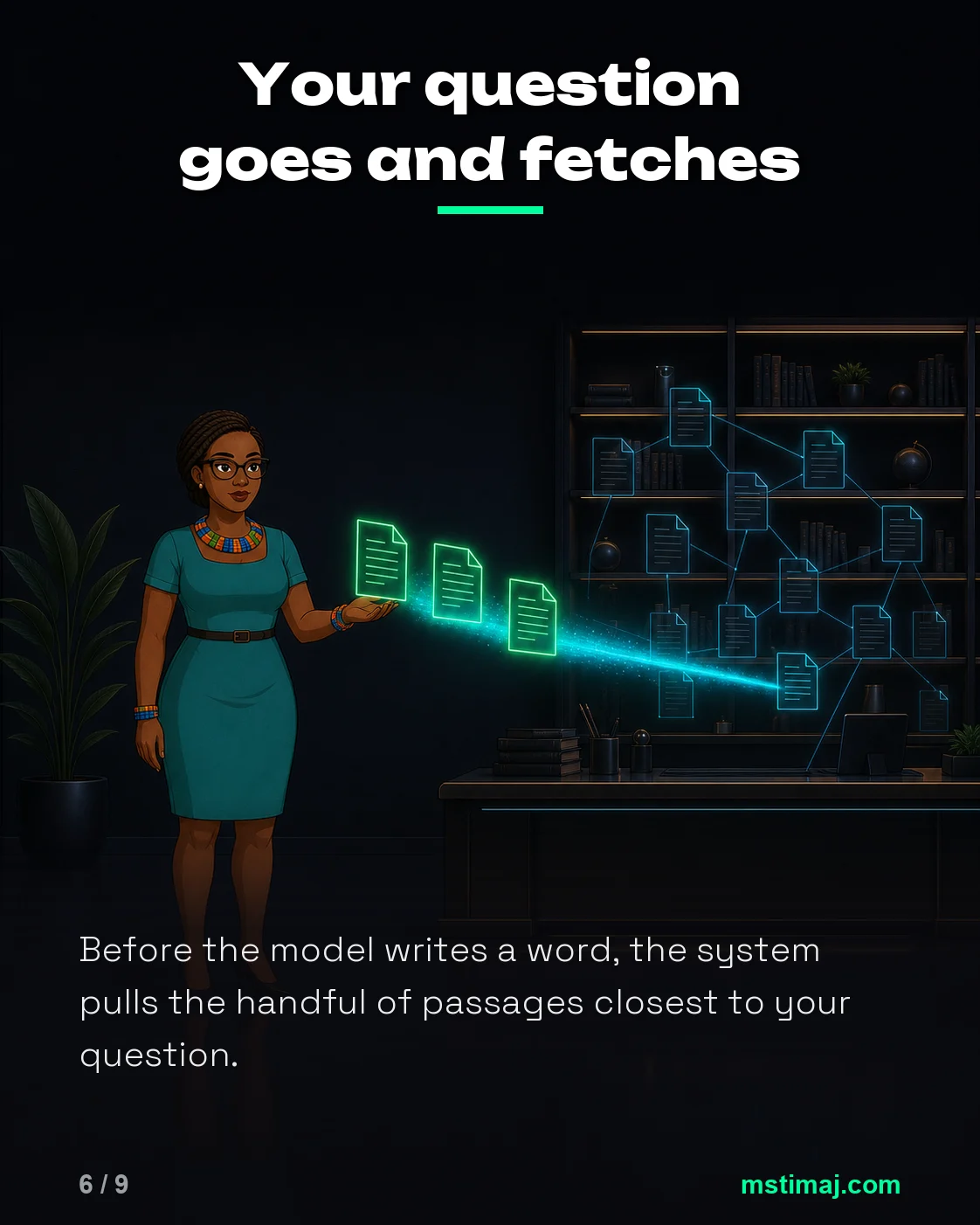
Your question goes and fetches
You ask something. Before the model writes a word, the system searches that filed library and pulls out the handful of passages closest to what you asked. Not the whole library. Just the pages that matter.
Now it answers with the pages open
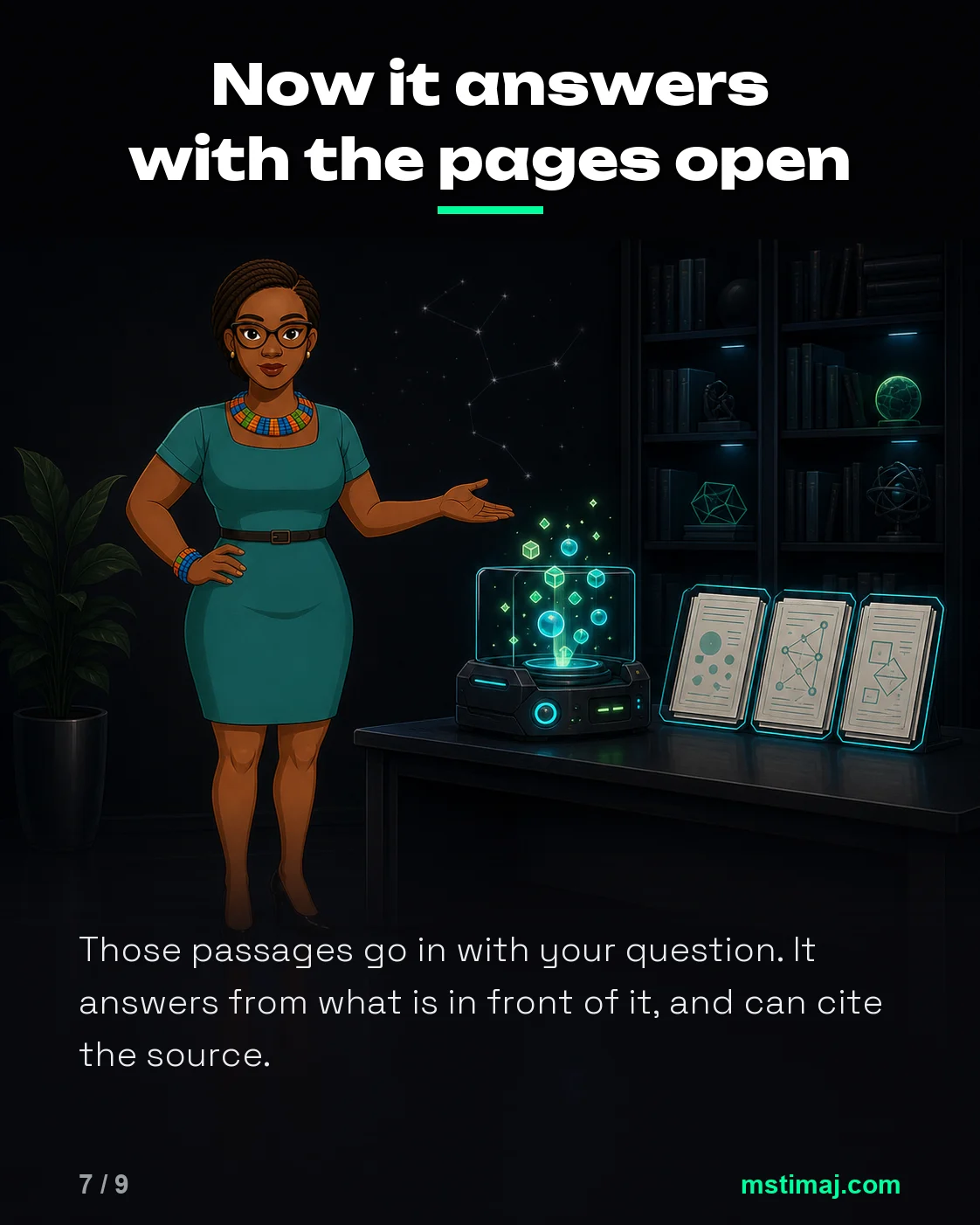
Those passages go to the model along with your question. It writes the answer from what is in front of it rather than from memory, which is why a good setup can point at the exact document it used.
A messy library gives messy answers
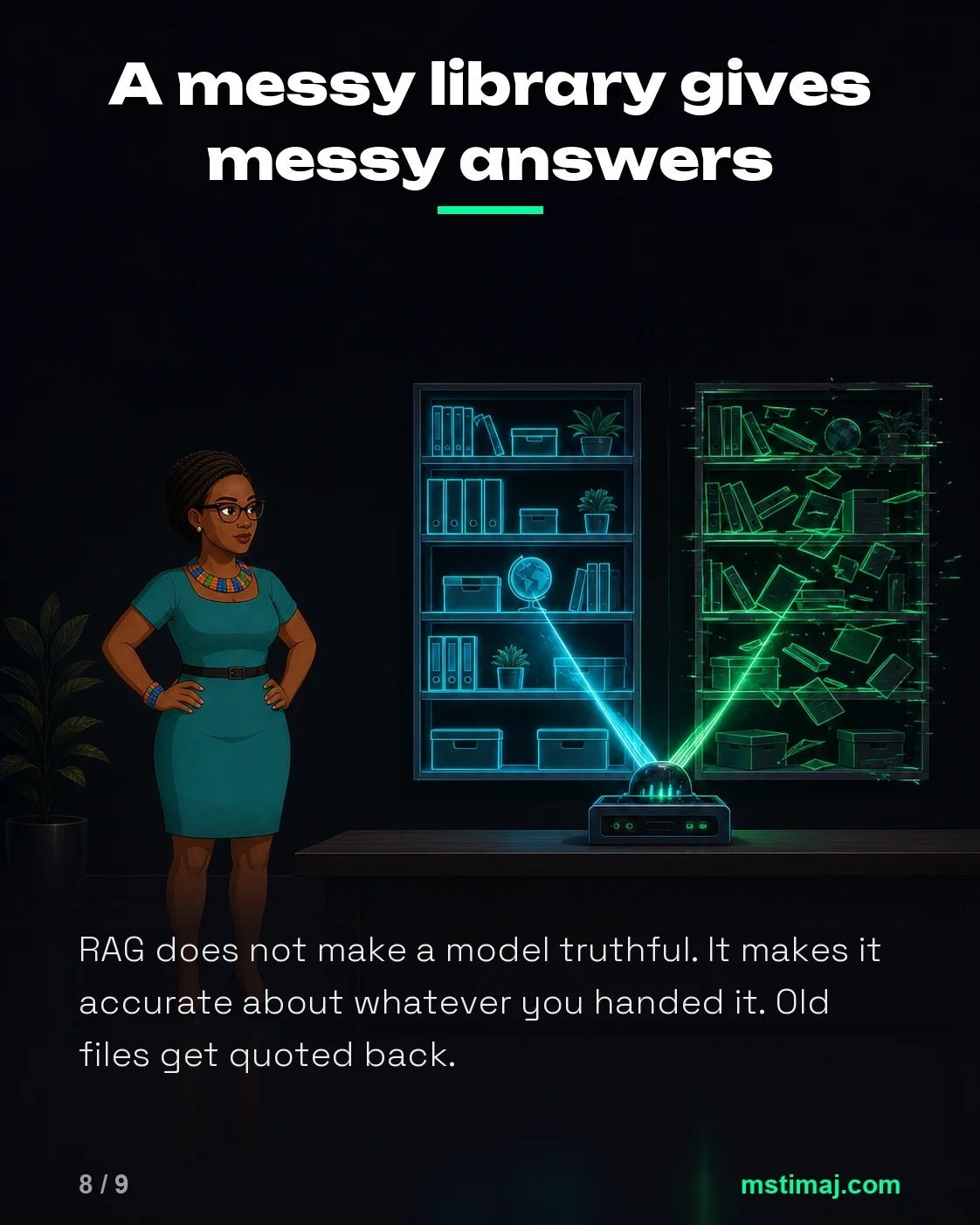
RAG does not make a model truthful. It makes it accurate about whatever you handed it. Outdated policies, duplicate files, and a three-year-old price list will be quoted back to you with total confidence. The library is the product.
RAG in five lines
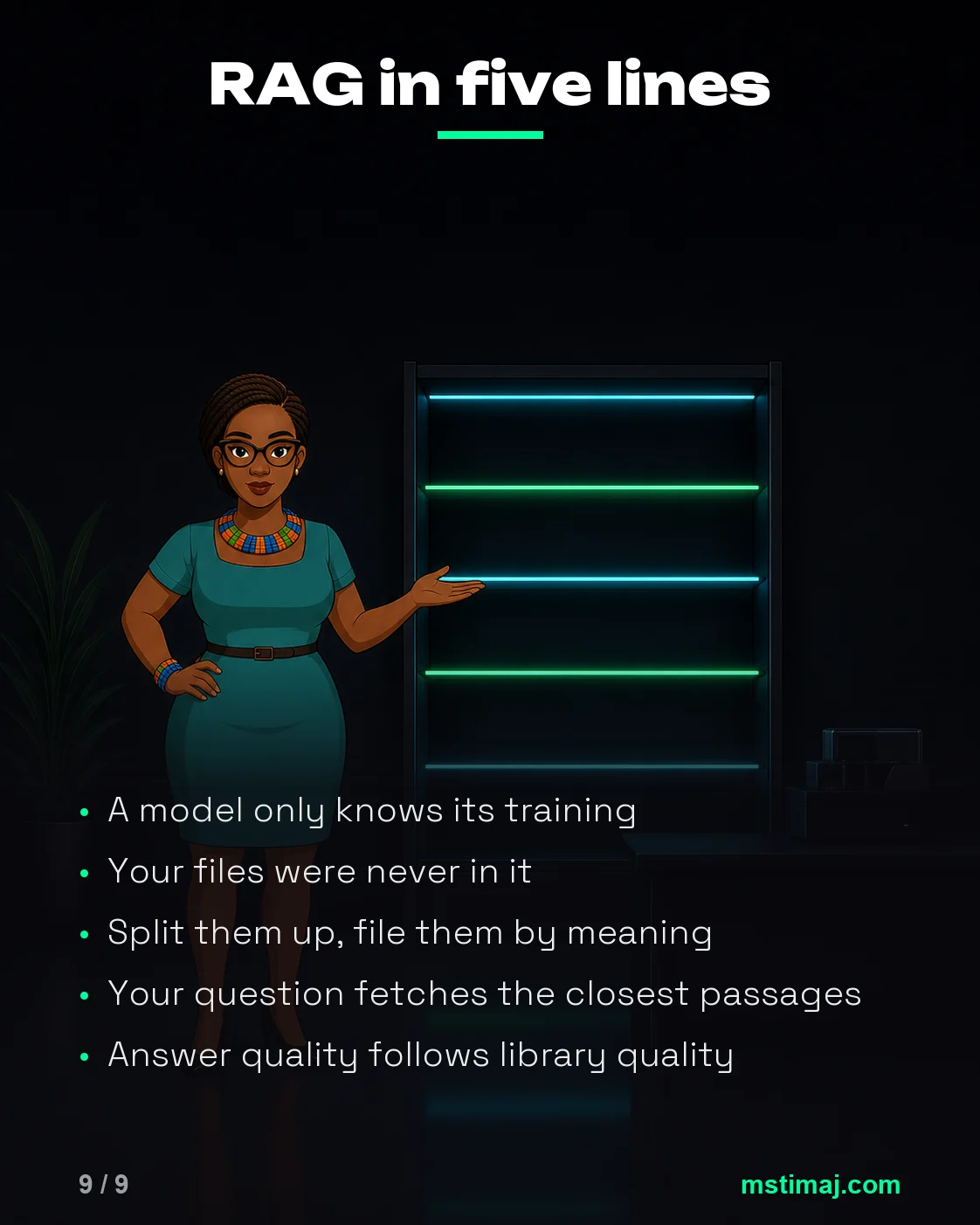
The whole idea in five lines: a model only knows its training, your files were never in it, so you file them by meaning, fetch the closest passages, and accept that answer quality follows library quality.
More from Neural Canvas
What Is a Context Window? Why Long Chats Start Forgetting
A beginner-friendly visual explainer on the context window: what the AI can actually see at any moment, why it re-reads the whole conversation every turn, and why a long chat quietly starts forgetting what you agreed.
What Is an AI Agent? The Difference Between Answering and Doing
A beginner-friendly visual explainer on AI agents: how giving a model tools and a goal turns answering into doing, why agents work in loops, and where human approval belongs.
What Is MCP? The Universal Adapter for AI Tools
A plain-language visual explainer on the Model Context Protocol: the connection problem it solves, how the two sides fit together, and why one standard plug beats a drawer full of adapters.
Let's Work Together
Whether you need AI automation, strategic guidance, or want to explore what's possible, I'm here to help.