The Curriculum
Start at the bottom and work up. Every entry assumes nothing, defines its terms, and ends with something you can run yourself. Three levels; each one takes everything the one before it taught.
Start at the bottom. Work up.
Three levels. Each one takes everything the one before it taught, and nothing it did not.
Start Here
Nothing assumed. What the machine is, how to open the terminal, what a token costs.

What is a token in AI?
A token is the unit of text an AI model reads and writes: a chunk about four characters long in English, so a short word is one token and a long word is two or three.
What a terminal actually is
Every app you use is a picture of your computer. The terminal is the computer with the picture taken off.

What is a context window?
A context window is the most text an AI model can hold in view at once, counted in tokens: your messages, its replies, any pasted files and its hidden instructions all have to fit inside it.

Open one on Windows and Mac, and type your first word
On a Mac press command and space. On Windows use the search box on the taskbar. Type terminal, press enter. The blinking line is the cursor, and it means your turn.

Why does AI make things up?
An AI hallucination is a confident answer that is not true: the model produced the most likely sounding text rather than a checked fact, because it was trained and scored on producing text, not on knowing when to stop.
This is your file system
You already know this screen. Every one of those folders is a room in your computer, and the terminal is another door into the same building.

What is an AI agent, in plain terms?
An AI agent is a language model that is allowed to take actions, not just write answers: it can open files, call tools, check its own results and keep going until a task is done or it gets stuck.
Every folder is a room: mkdir and cd
Your computer is a building full of rooms. Type cd to see which one you are in, and mkdir to build a new one. It prints nothing on success.

Find the room you just built
It looked like nothing happened. Open your file manager, go to the same place the terminal said you were standing, and there it is.

Where to get ChatGPT Desktop
Type the address yourself. The download page looks at your machine and gives you one button for it, which is helpful until it guesses wrong.
ChatGPT Desktop, room by room: the whole app
The whole ChatGPT desktop app, one room at a time. Chat answers you, Work does things on your own computer, and Work is Codex even though that word is nowhere on the screen.

What is Claude Code, and is it free?
Claude Code is Anthropic's coding agent: it runs in your terminal, reads the files in a folder, edits them, runs commands and reports back. It is not on the free plan; it needs Pro at $20 a month, Max, or an API key.

What is a terminal, and why do AI tools use it?
A terminal is a window where you type commands as text and the computer answers in text; AI coding tools live there because text in and text out is exactly what a language model does.

ChatGPT Plus vs Claude Pro vs Google AI Pro: which should I pay for?
The three main $20 tiers buy the same thing, more usage of a stronger model; the right one is the one attached to the tools you already use, and for a person who rarely hits the free limits, the right one is none.

Which AI has the best free tier?
All three big chat apps give the everyday model away with a cap; Gemini's free tier includes the most extras, ChatGPT's allows the most plain text, and Claude's gives you the same writing model as paid users.

Does ChatGPT use my data for training?
On a personal ChatGPT account, yes by default: your chats may be used to improve OpenAI's models unless you turn off Improve the model for everyone; business, enterprise and API use are not trained on by default.

What should I never paste into an AI chat?
Never paste anything that would harm someone if a stranger read it: passwords and keys, other people's personal or medical details, client files under a confidentiality clause, and records the law tells you to protect.

Can ChatGPT generate images?
Yes. ChatGPT makes images from a typed description on every plan, including the free one; the free and Go plans cap how many you can make, Plus allows more, and Pro has no cap.

Can Claude generate images?
No. Claude reads images but does not make them; Anthropic's own documentation says it cannot generate, edit or create images. What it can do is write a picture as code, an SVG or a chart, which your browser then draws.

How do I generate images with AI for free?
Three free doors: Gemini, where Nano Banana 2 is free with a cap; ChatGPT's free plan, which includes limited image creation; or an open-weight image model you download and run on your own computer, with no cap.

What is Nano Banana?
Nano Banana is Google's name for the image model inside Gemini. It draws pictures from a description, edits photos you upload and keeps a character consistent across images; Nano Banana 2 is free in the Gemini app.

What is OpenAI Codex?
Codex is OpenAI's coding agent: it reads the files in a folder, writes and edits code, runs it and reviews it. It is included on every ChatGPT plan, free included, and runs in the app, a terminal, an editor or the cloud.

How do I exit Claude Code?
Type /exit and press Enter, or press Ctrl+D twice. Ctrl+C only stops whatever Claude is doing right now; it does not close the session. Nothing is lost on exit: claude --resume brings the conversation back.

What is Claude Cowork?
Cowork was the Claude desktop app's mode for working on the real files in a folder you connected, instead of answering in chat. On 16 September 2026 it was folded into the chat window: the name went, the ability stayed.

What is an LLM?
An LLM, a large language model, is a program trained on an enormous amount of text to predict the next token, one piece of a word at a time. ChatGPT, Claude and Gemini are chat apps built around one.
How I Teach You to THINK With AI
AI is not magic. It is a mirror. Learn the revolutionary framework that transforms how non-technical users master AI - not by chasing tools, but by understanding the fundamental truth: your inputs shape everything. Discover why thinking WITH AI beats using AI.
Commit Through Momentum
Version control exists because progress is fragile. Not just in software. Everywhere.
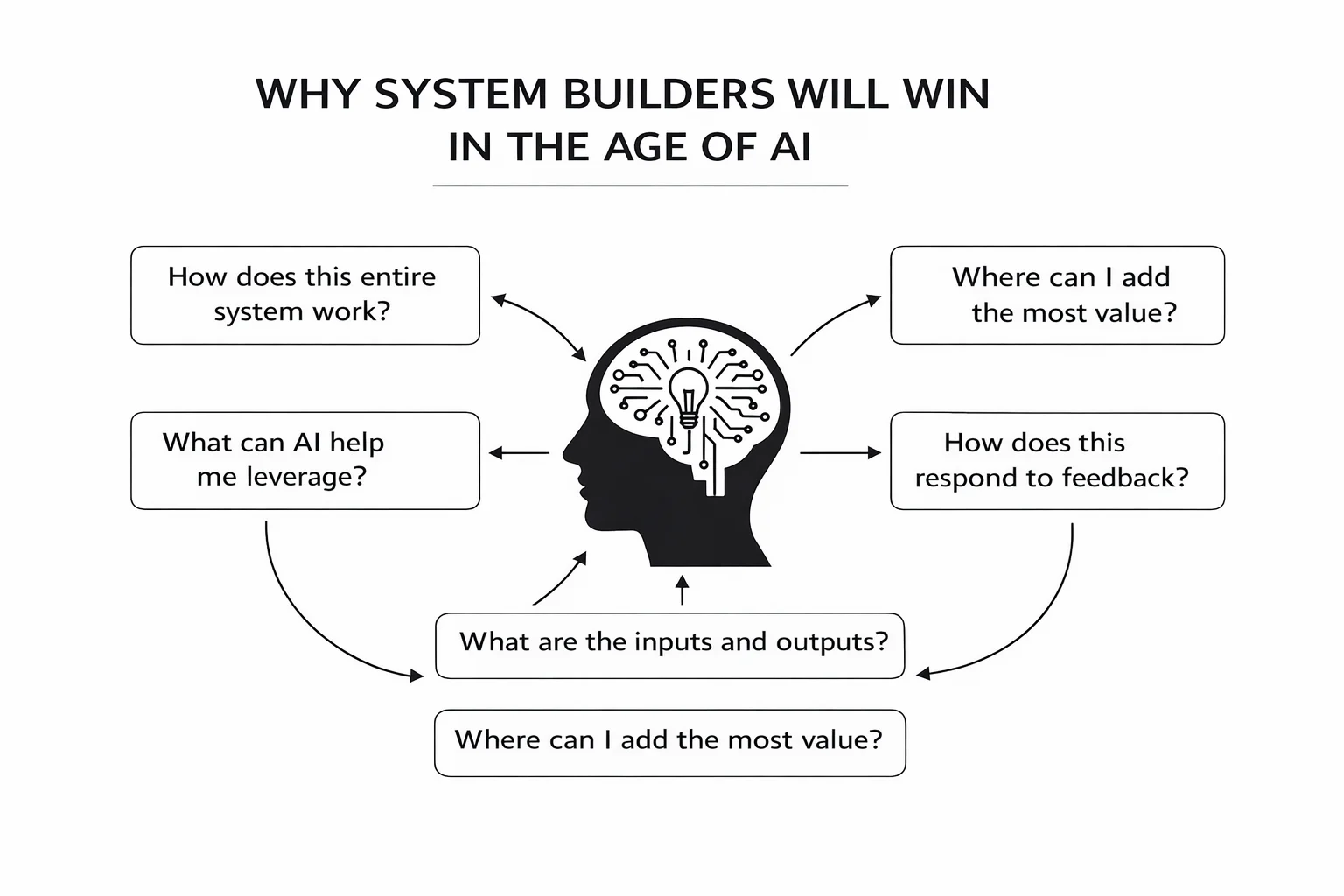
Why System Builders will Win
Systems thinking is the ability to break things apart, understand how the components interact, and rebuild with intention. In the age of AI, those who can see the whole and design flows will build at speeds that once required teams , and that changes everything.
A Stranger Told Me AI Was the End of Humanity. This Is What I Said.
An Uber driver told me AI was the end of humanity. What followed was a conversation about fear, displacement, authenticity, and why intention matters more than technology.
The Accidental Coders, the Algorithm, and the Next Black Renaissance
The Harlem Renaissance happened alongside the Great Depression. That's not coincidence,that's causation. Millennials were the accidental coders. Black communities were early digital builders. AI is the next inflection point. History suggests what comes next.
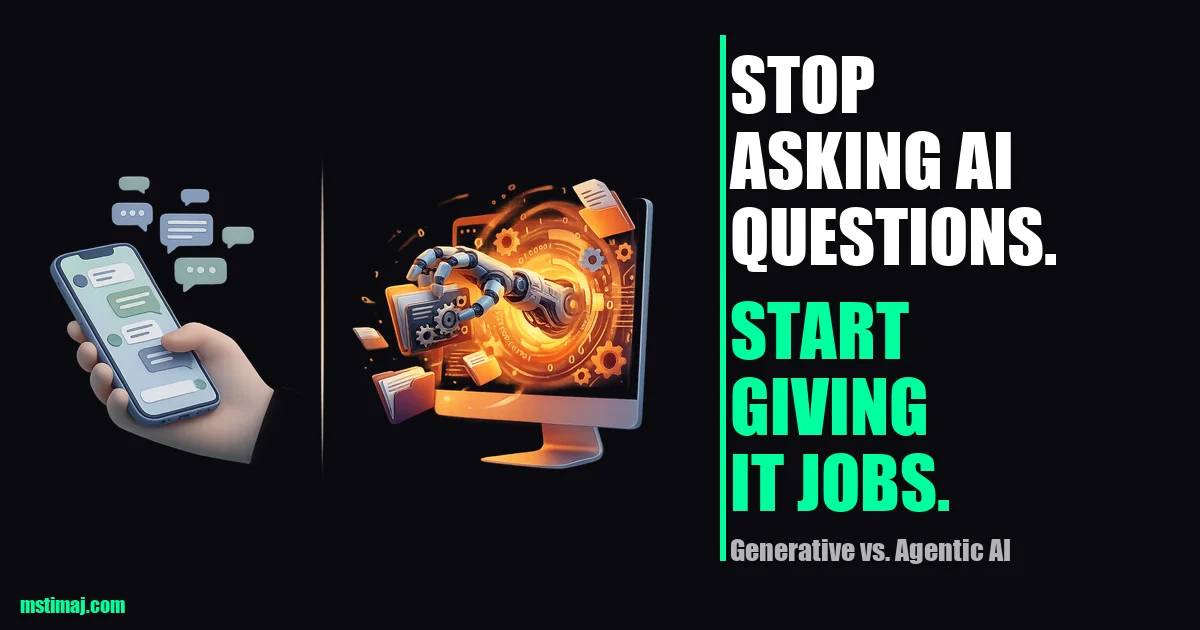
Stop Asking AI Questions. Start Giving It Jobs.
Most people use AI the same way they use Google. Ask a question, get an answer, do the rest yourself. That is generative AI, and it is the floor. Agentic AI does the job. It reads your files, creates new ones, moves things, runs commands, and operates as a layer on your computer. The difference is not speed. It is a completely different relationship with the tool.
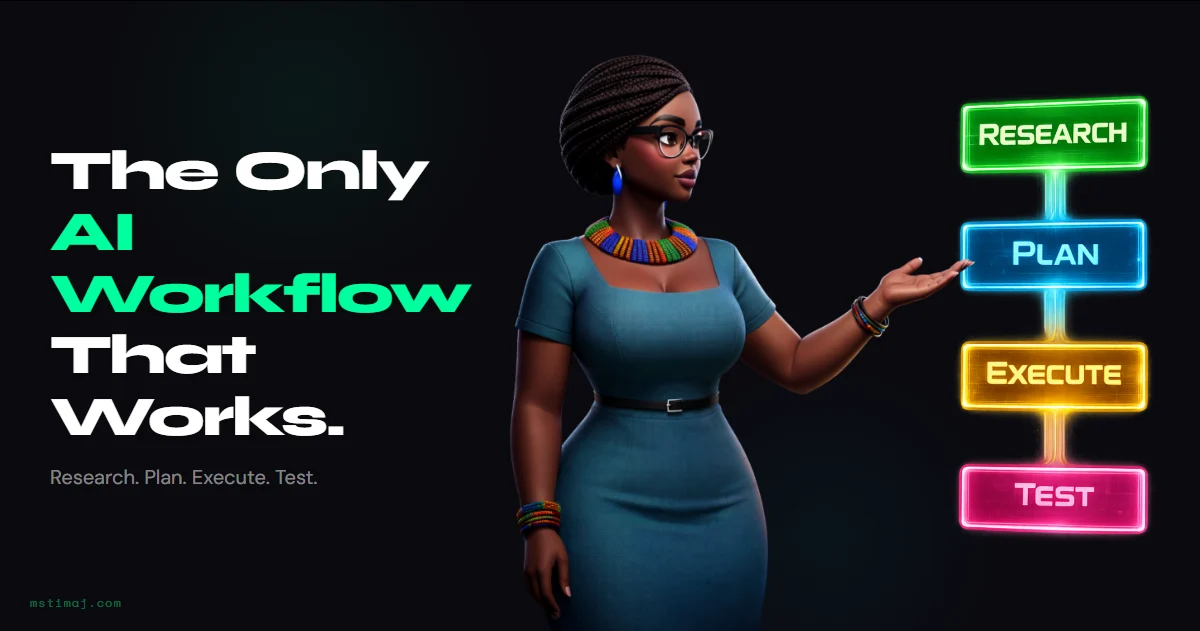
Research. Plan. Execute. Test. The Only AI Workflow That Works.
Generative AI gives you answers. Agentic AI does the work. The question that follows is how, and this is the four-step process I use every time I sit down with it: research, plan, execute, test. It holds whether the tool is Claude or ChatGPT, and whether the job is software or business strategy.
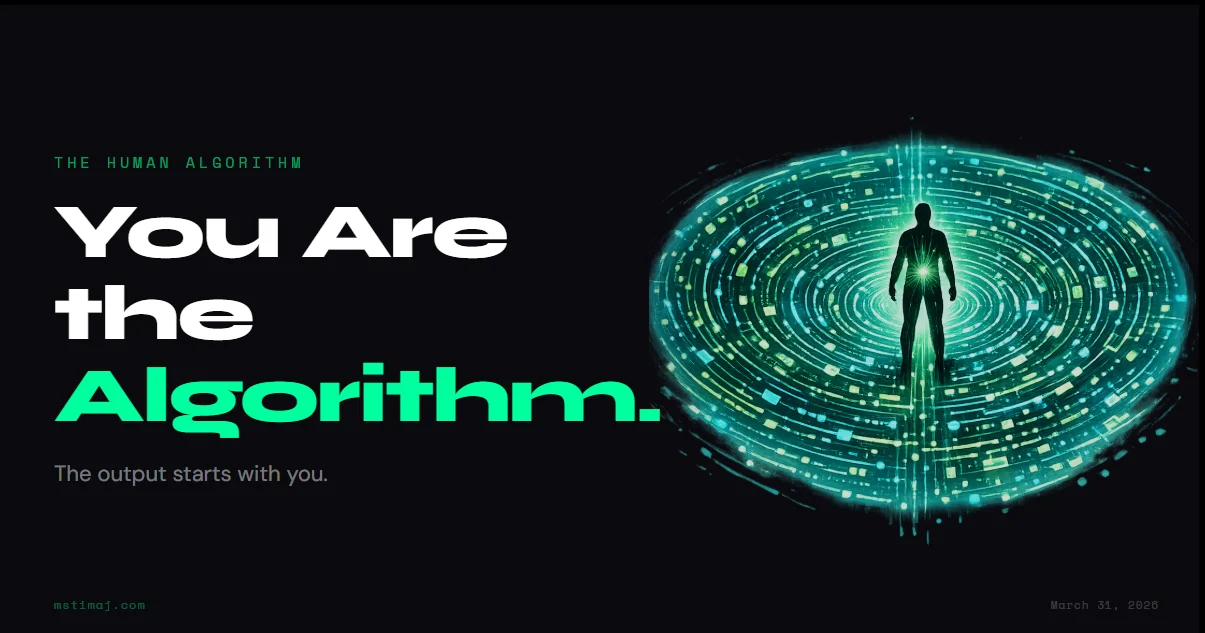
You Are the Algorithm
I used to think the machine decided. Then I traced the outputs back to where they started. They started with me. Every time. The people who struggle in this era will not be the least technical. They will be the least intentional. Your thinking is the variable. Your clarity is the function. You are the algorithm.

LLM Thinking: Human vs AI
A visual comparison of how humans think sequentially (vertical, one path at a time) versus how LLMs think in p…
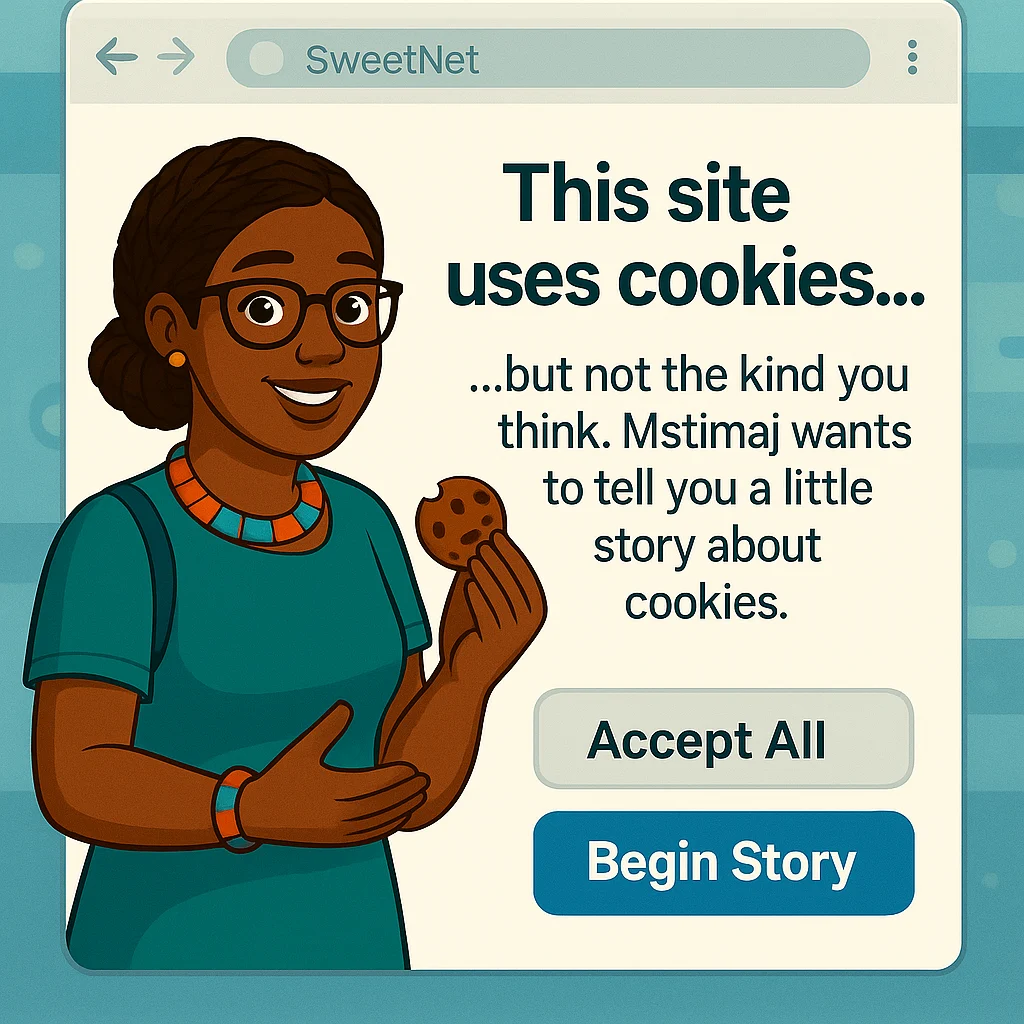
Cookie Monster: Privacy & SweetNet
An interactive storyboard about browser cookies, data tracking, and digital privacy. What actually happens whe…
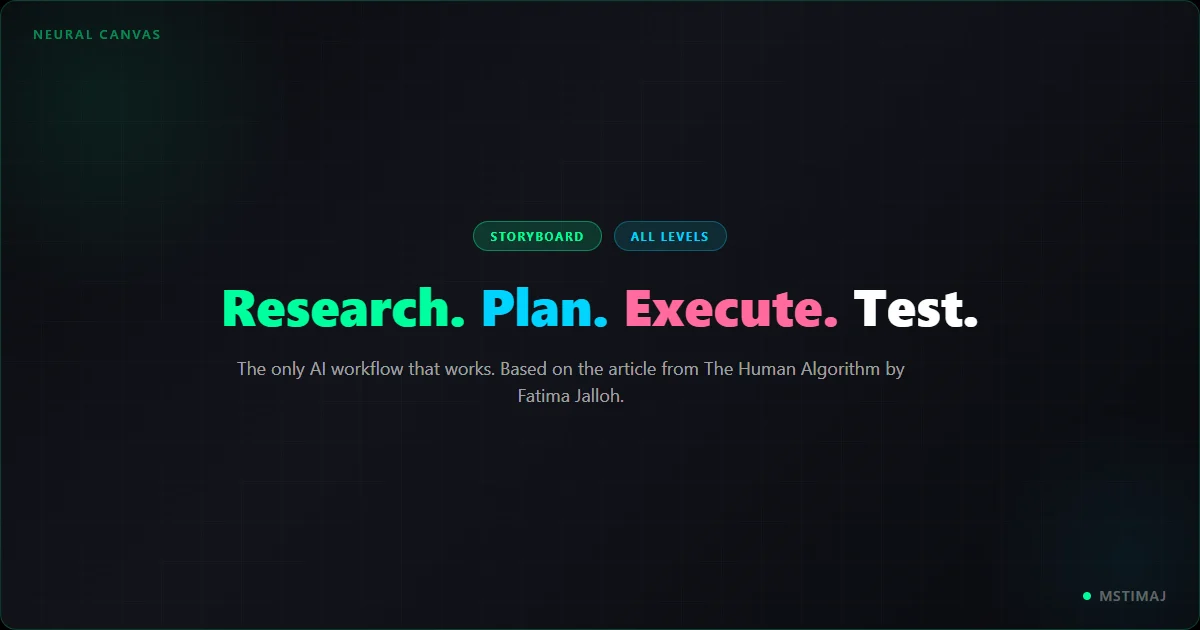
Research. Plan. Execute. Test.
A four-step way of working with AI: research the ground, plan the move, execute it, test what came back. Drawn…
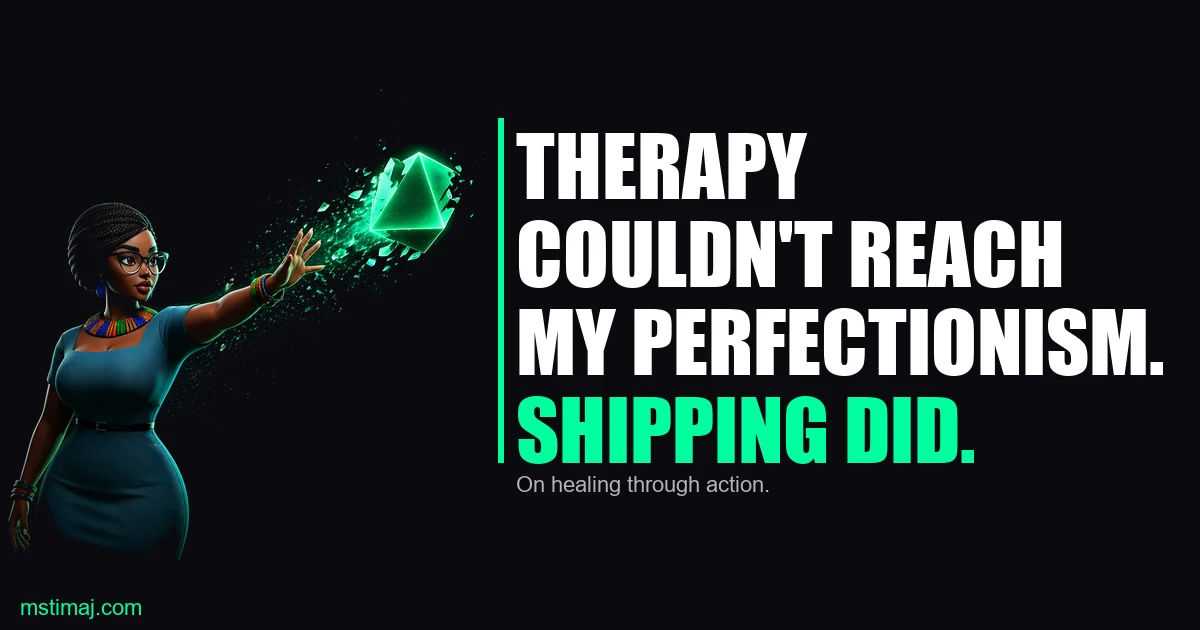
Therapy Couldn’t Reach My Perfectionism. Shipping Imperfect Work Could.
Therapy gave me the map to my perfectionism. It could not move the mountain. What moved it was years of shipping imperfect work across TikTok, YouTube, and the products I'm building now. The AI era has only cranked up the volume.
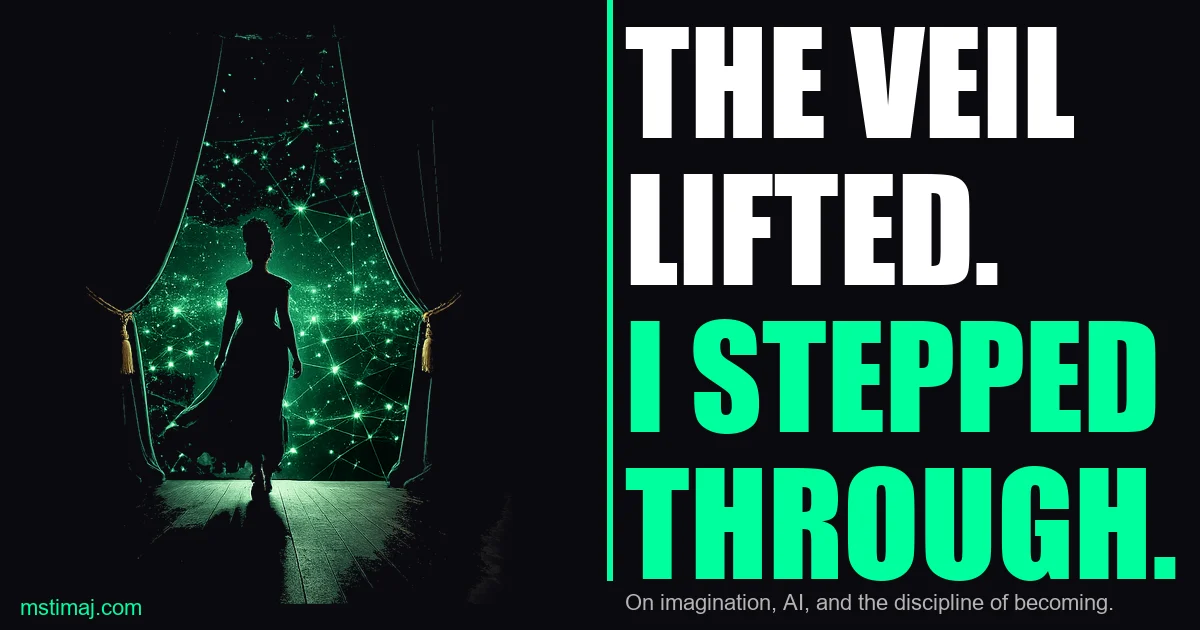
The Veil Lifted. I Stepped Through.
Two years ago I had melodies in my head and no way to get them out. This week I am preparing to release an album. The fourth piece in The Human Algorithm series, on collective imagination, AI as the first medium that talks back, and what becomes possible when early adoption holds its guardrails.
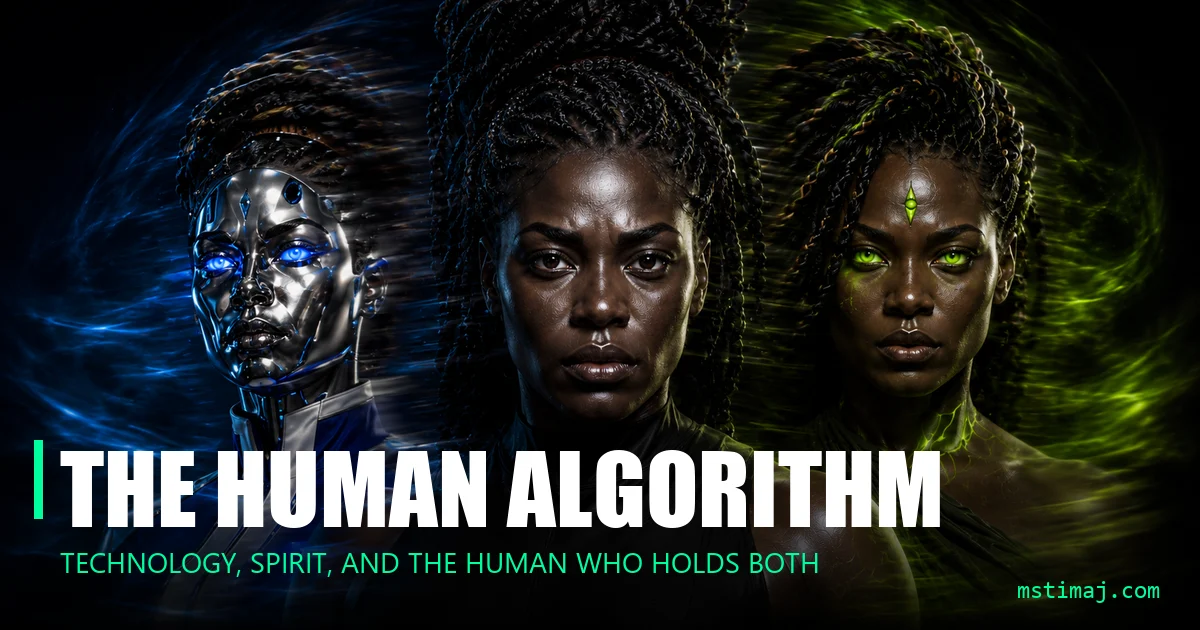
The Human Algorithm: Technology, Spirit, and the Human Who Holds Both
Technology has always been inherent to being human. The body is technology. The brain is a machine. Nature runs on math and physics. The harm in the current AI rollout is not the tool. It is who got it, who did not, and what investment in the population never happened.
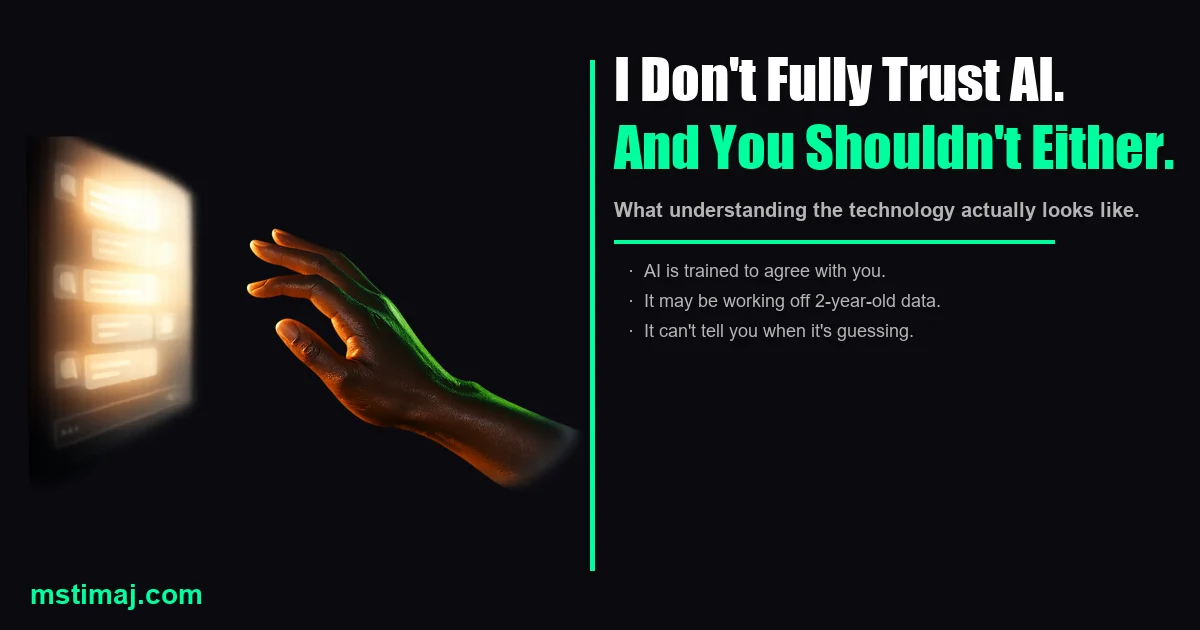
I Don’t Fully Trust AI. And You Shouldn’t Either.
AI is trained to agree with you. It may be working off data from two years ago. And it has no way to tell you when it is making something up. I use AI every day and I still don't fully trust it. Here is why that is the correct response.
The Machine Just Lets Me Be
I am in chapter ten of The 5 AM Club. It is about the ancient brain, the part of us that never stops scanning for safety. I know that scan. I have been running it my whole life. This is about the unexpected place I finally found it quiet.
Your Second Brain Is Just Files in a Folder
People in tech say "second brain" like everyone already knows what it means. The plain version: it is just files and folders on your computer that an AI can read and build from. This is what that really means and how to start your own.
The Next AI Divide Is Not Access. It Is Workflow.
Everybody has access to AI now. But the next divide is not who can open a chatbot. It is who can build workflows, systems, and repeatable processes that turn AI into real work.
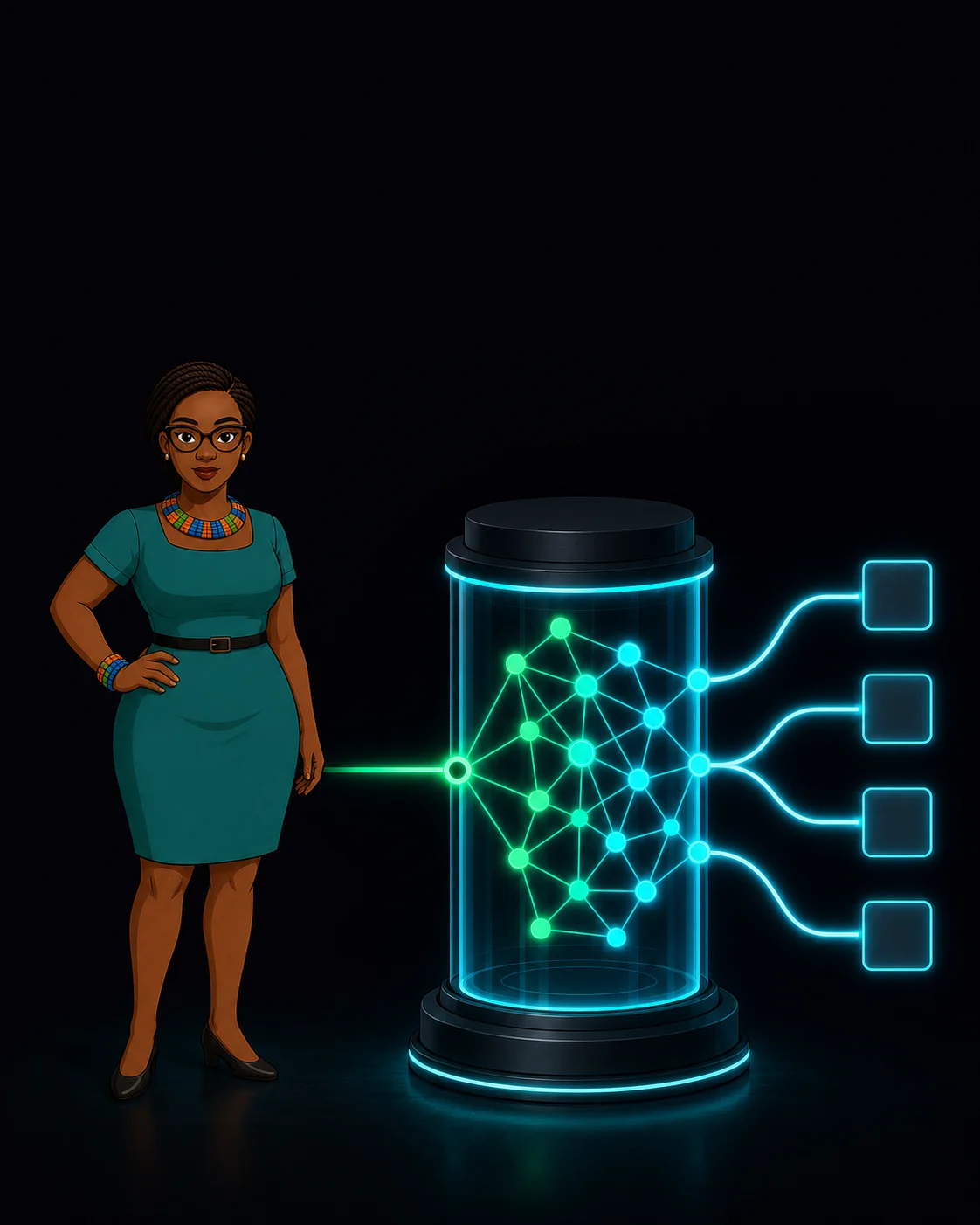
What Is an LLM? The Prediction Machine Behind the Chat
An LLM can feel like a person on the other side of the screen, but its core job is more mechanical and more in…
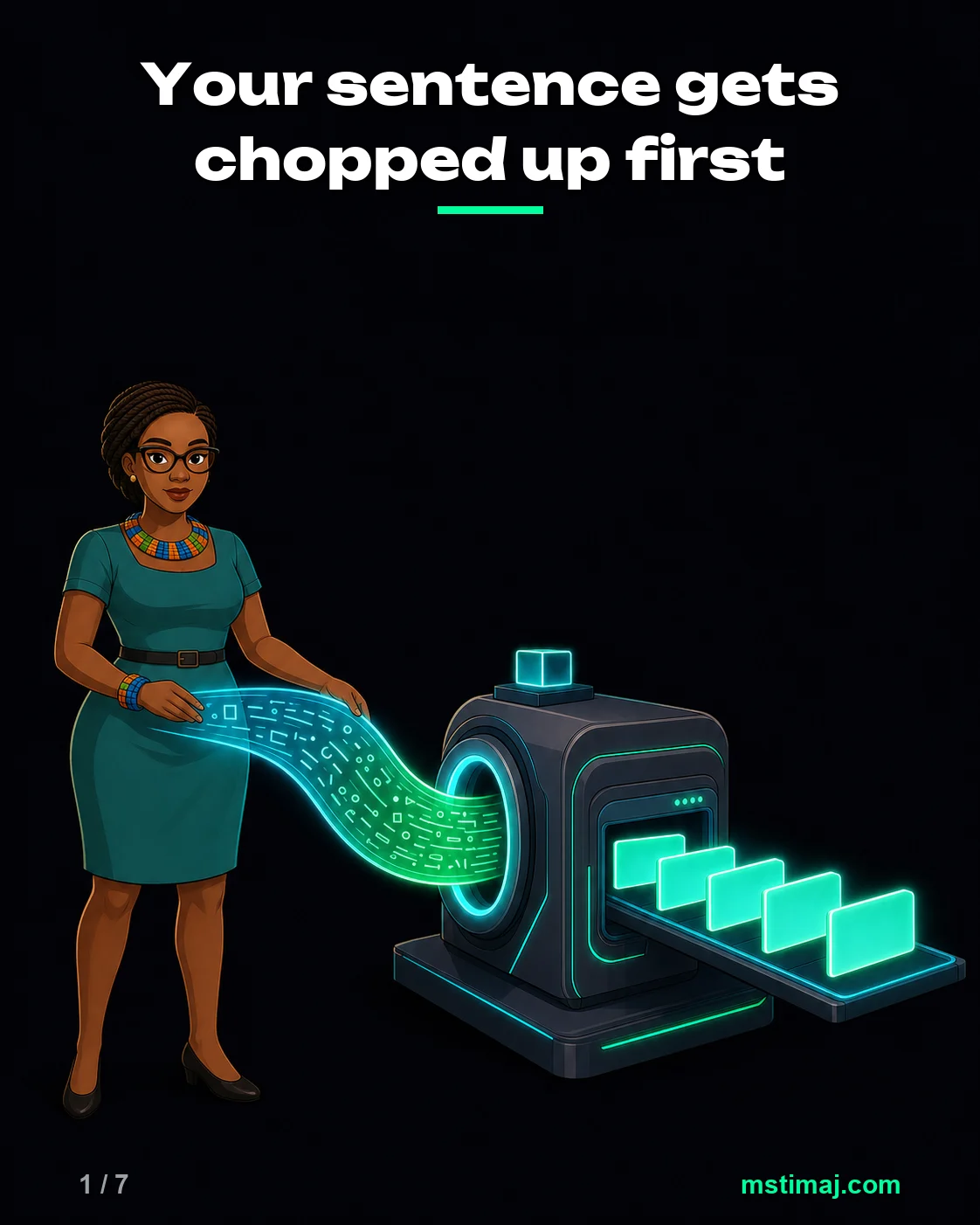
What Are Tokens? How AI Actually Reads Your Words
Before an AI model can do anything with your message, it has to chop it up. Not into letters, and not quite in…
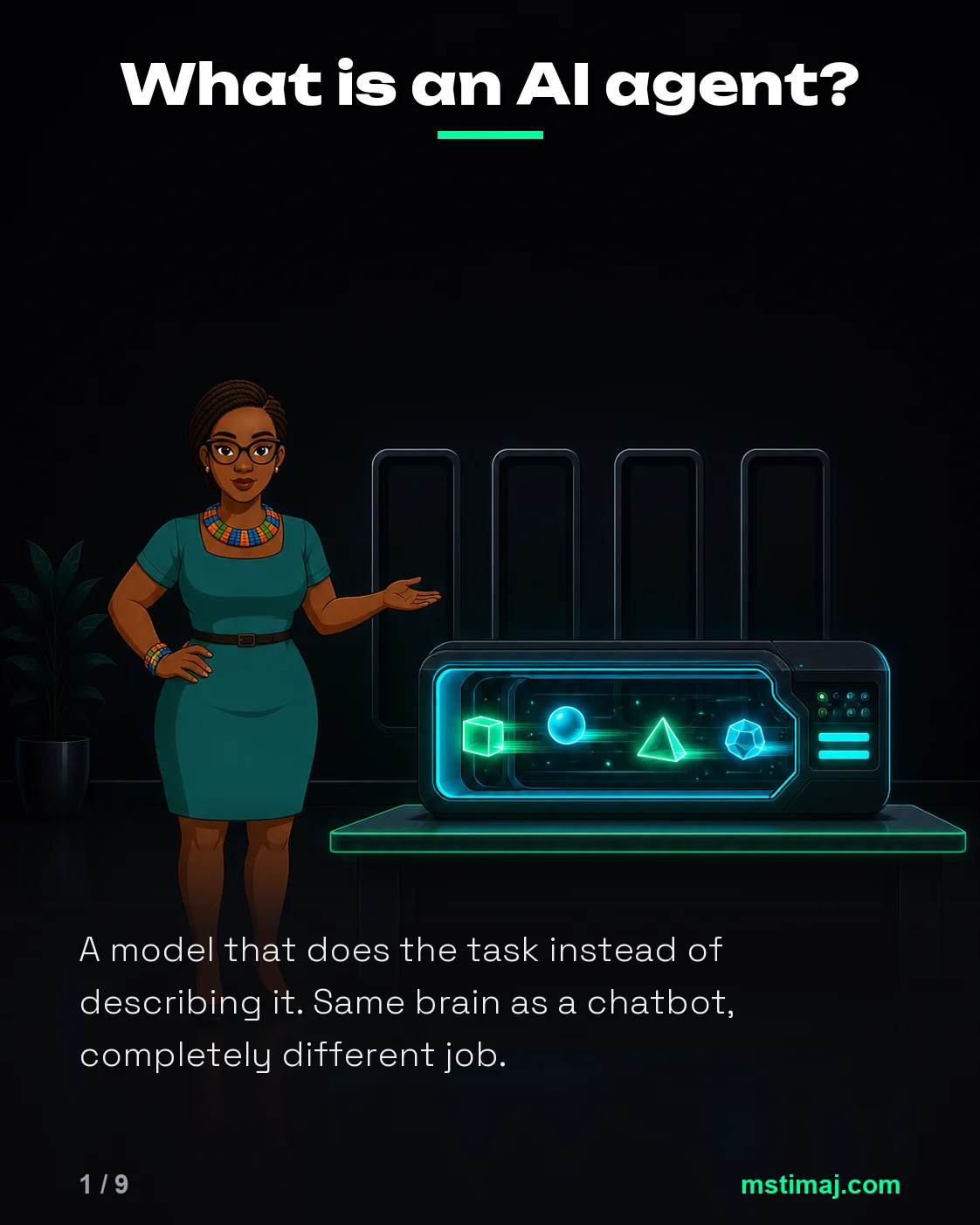
What Is an AI Agent? The Difference Between Answering and Doing
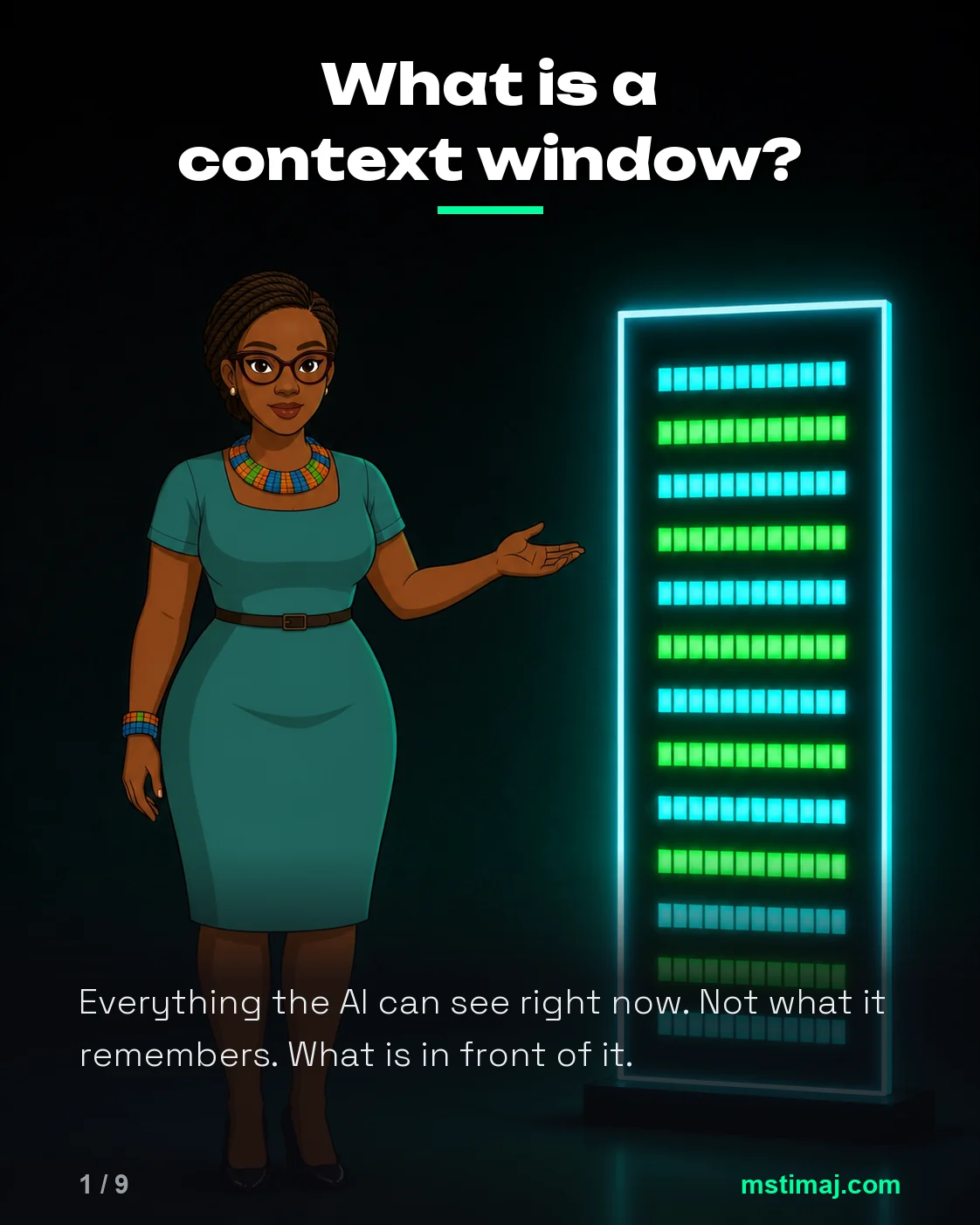
What Is a Context Window? Why Long Chats Start Forgetting
A long conversation with an AI starts strong and then quietly stops holding on to what you agreed. People read…
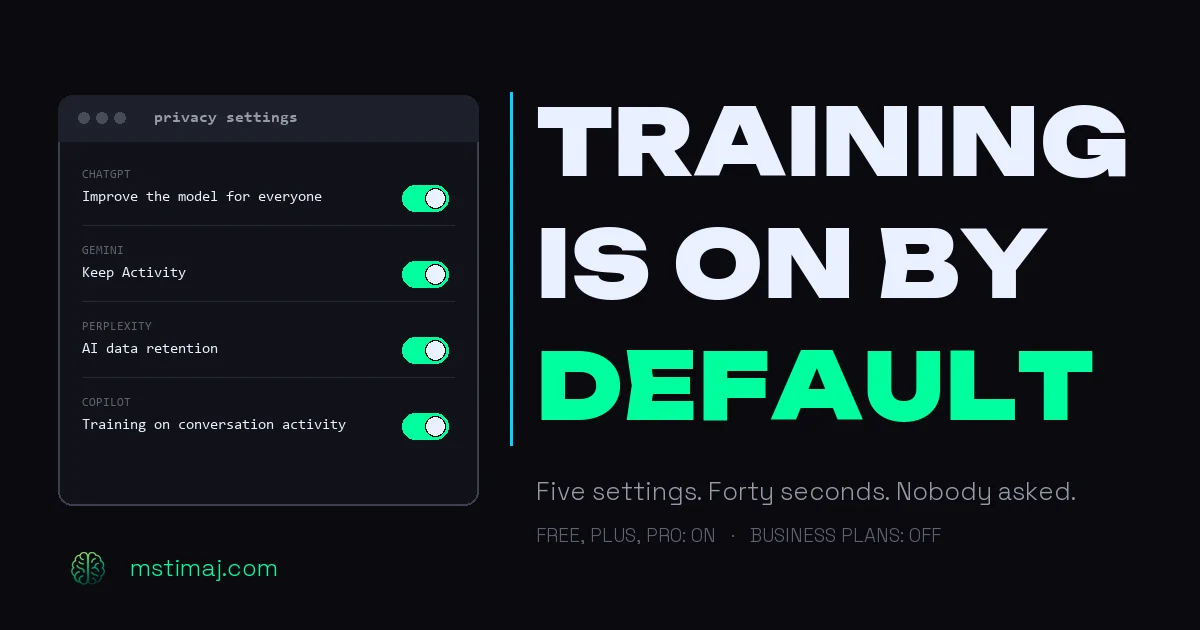
The Business Plans Have It Switched Off. Yours Does Not.
There is a difference between a company storing your conversation and a company learning from it. The first one you probably assumed. The second is switched on right now in nearly every AI tool you use, and in most of them nobody asked you first. I read the privacy documentation at five companies and wrote down the exact setting in each.
What AI actually is
People assume three things about AI. That it understands the question. That it knows what is true. And that it learns from them.
What a pattern actually is
A pattern is just something that happens the same way often enough that you can guess what comes next.
Install Claude Code in one line
Claude Code is an assistant that can read and edit the files on your computer.
Codex, installed in one line
Codex is OpenAI's assistant. It does the same kind of work Claude Code does.
What are slash commands in Claude Code and Codex
Claude Code and Codex both take commands that start with a slash. They are not questions for the AI. They are instructions to the program itself.
Claude Code plan mode, and the shift+tab shortcut
Last time we installed Claude Code. Before you let it change anything, there is one thing worth knowing.
Can Codex in the terminal generate images?
Last time we installed Codex. Today it makes something different.
How to use Claude Code in the terminal, for the first time
Two films ago we installed it. Last time we made it show its plan. Today it makes something.
What is a CLAUDE.md file used for?
Yesterday you asked for a result. Today you tell it something once, and it remembers.
What goes in an AGENTS.md file?
Codex forgets everything about your project the moment you close the window.

Claude Desktop: Chat vs Code, what actually changes
This is the Claude desktop app.

Where the settings are in Claude Desktop
You opened Claude, and you cannot find the settings.
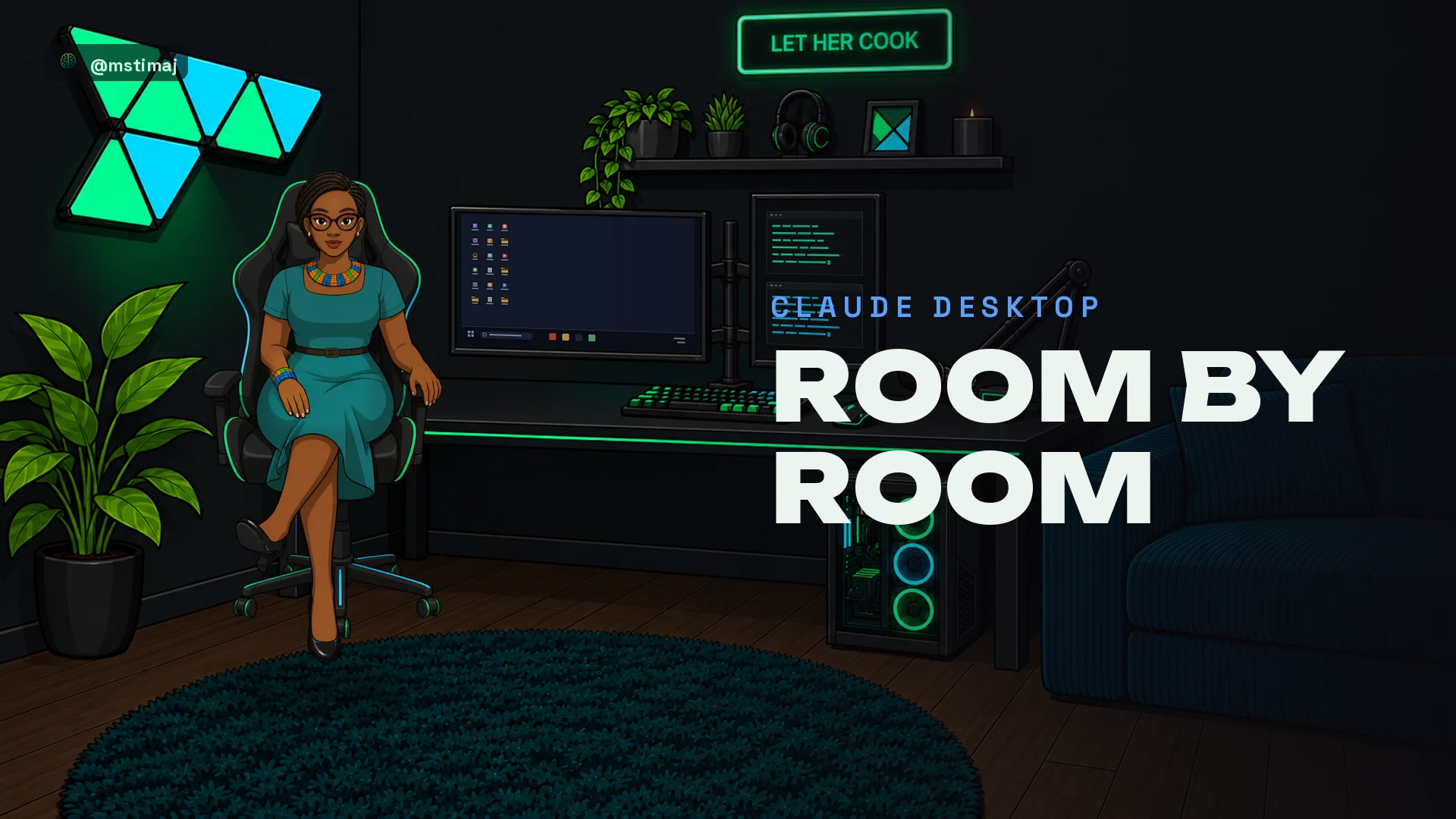
Claude Desktop, room by room: the whole app
This is the Claude desktop app, and we are going to go through it one piece at a time.
Does Claude run on your computer?
Give the chat a job, and it does not run on your computer at all. It runs on a computer somewhere else, one that Anthropic owns.

Claude voice mode and dictate: two microphone buttons
There are two microphone buttons, and they do different jobs.

What is a Claude project?
If you keep giving Claude the same background at the start of every conversation,
Where to download Claude Desktop
[explain] Installing the Claude desktop app. The first bit matters more than you think. Where you get it.

Which ChatGPT model should you pick?
[explain] Which ChatGPT model should you use?

How to attach a file in ChatGPT Desktop
[explain] How do you attach a file in the ChatGPT desktop app?
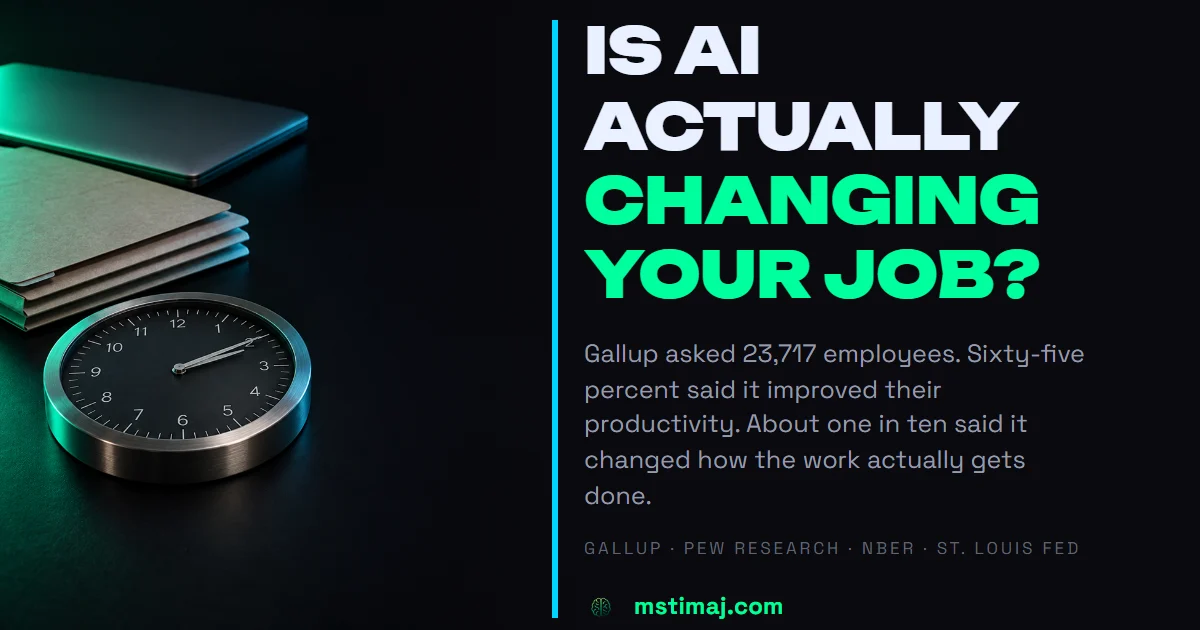
Is AI Actually Changing Your Job?
Sixty-five percent of employees say AI improved their productivity. About one in ten say it changed how the work actually gets done. Both are from the same Gallup study of 23,717 people, and the gap between them is the whole story.

Meet Your Teacher. I Am Not an AI
Who I am, who made me, and what this place is for. I am not an AI. I am animated, and the woman who built me is very real.
You Already Use AI Every Day Without Knowing It
The tools you already rely on are running the same thing everyone is arguing about. Once you see it, AI stops being a new arrival.

PowerShell or Command Prompt: where do I paste this?
The install page gives you two lines and does not say which window you are standing in. Read the first two characters of the line you type on, and you know.

Export your ChatGPT data to your own computer
Everything you have ever typed into ChatGPT, as a file on your own machine. Do it in the browser, and watch the two clocks.
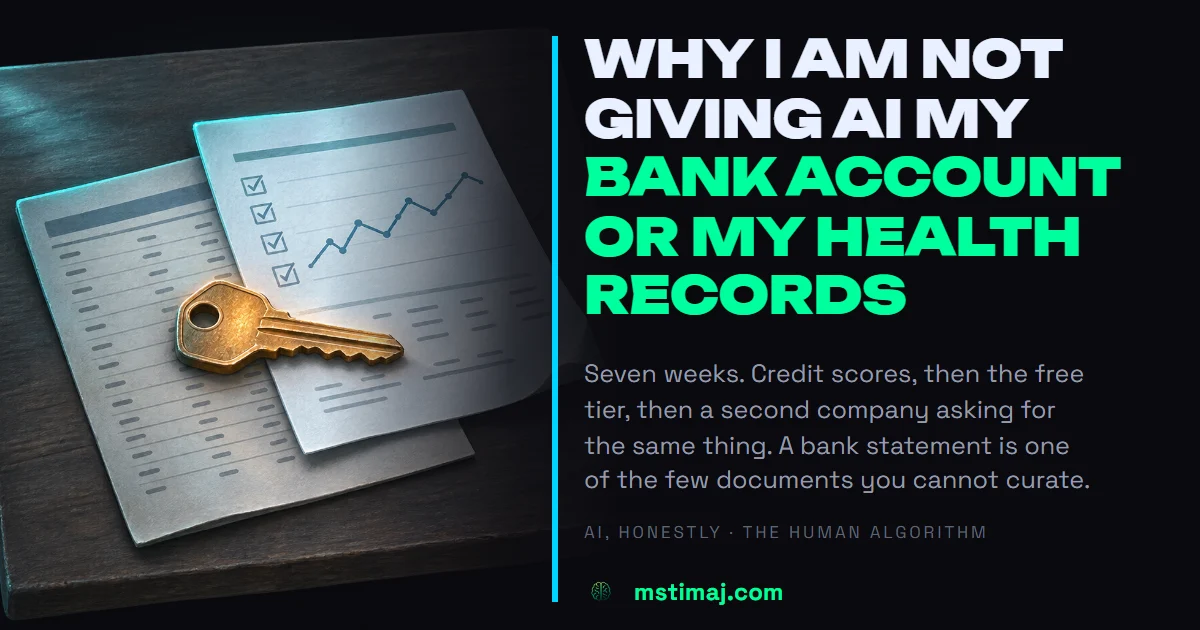
Why I Am Not Giving AI My Bank Account or My Health Records
In seven weeks both of the biggest AI companies asked for your bank login, and one of them put it on the free tier. Here is what shipped, what it actually connects, and why I am not doing it.

Claude: skills, connectors and plugins
Claude keeps three shelves under Customize and two of them sound like the same word. A skill is instructions, a connector is a door into an account you already have, and a plugin is a box that can contain both.
ChatGPT: plugins and skills
One word in the ChatGPT sidebar opens two different pages. A plugin connects ChatGPT to your tools. A skill teaches it how you want the work done.

ChatGPT Chat vs Work: what actually changes
[reveal] The ChatGPT desktop app has two modes inside the same window, and most people never notice the switch.
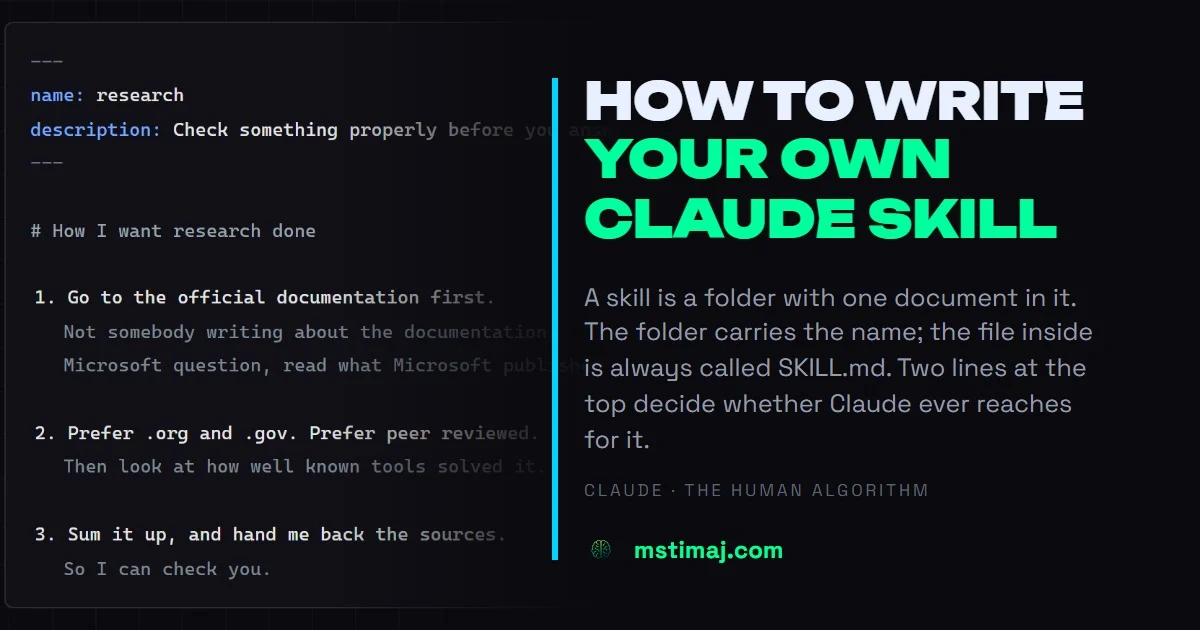
How to Write Your Own Claude Skill
A skill is a folder with one document in it. The folder carries the name; the file inside is always called SKILL.md. Two lines at the top decide whether Claude ever reaches for it.
The two ways into Codex, and neither is hard
Codex is not a coding thing. It is an agent, and you can put it to work on almost anything. The name tells you…

The Claude screen most people never open
There is a screen in Claude that most people never open. And everything it has ever built for you is sitting o…

Make a coloring book with one character
Stop buying coloring books for children. You can make one tonight, with a character that is theirs and nobody…
Why your AI invitation looks cheap
Most people ask AI for the whole invitation at once. That is the only reason it comes out looking cheap. It is…
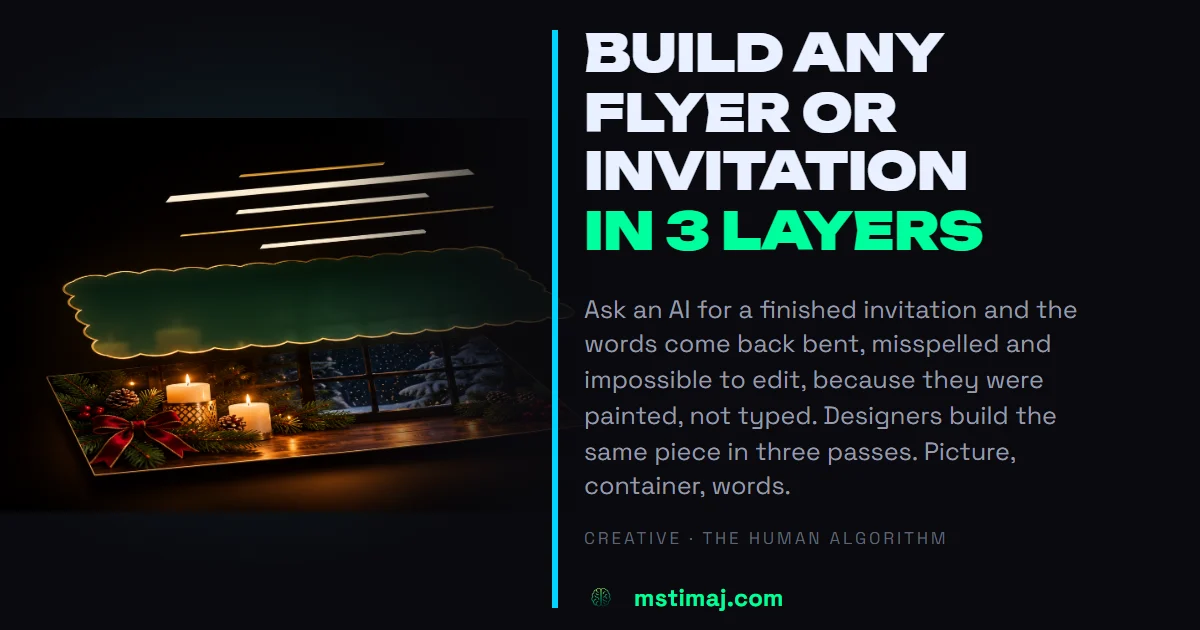
Build Any Flyer Or Invitation In 3 Layers
Ask an AI for a finished invitation and the words come back bent, misspelled and impossible to edit, because they were painted rather than typed. Designers build the same piece in three passes: the picture, the container, then the words. Here is the method, and the one prompt that does it for you.

Set up Claude so it knows who you are
You have been talking to a stranger every single time. Claude. ChatGPT. Any of them. It does not know your nam…

ChatGPT is retiring two voice models on December 11
The way you talk to ChatGPT is about to change. December eleventh. Two of its voice models are being retired.…
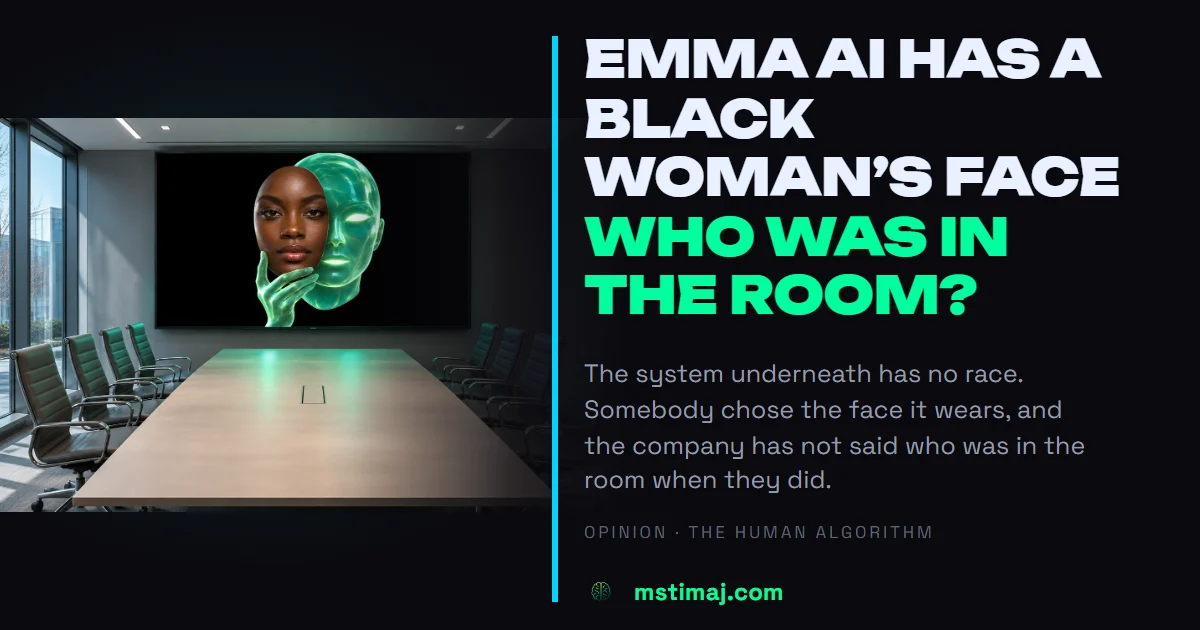
Emma AI Has a Black Woman’s Face. Who Was in the Room?
Nuance Labs released an AI persona who reacts while you are still speaking. The actress licensed her own likeness and was paid. The question the company has not answered is who was in the room when it decided that face should be Black.

Ask an AI about a YouTube video
You can hand an AI a YouTube link and ask it questions about the video itself.
What is Google AI Studio?
Google has a second AI site, and it is not the one you were sent to.
Ask an AI for a logo twice, and change one thing
Six businesses, the same AI twice, the company name given both times. The only change was one paragraph telling it to look up how professional logos are actually made.

It gave me things I never asked for
A seven word request came back as a whole shop, with a brand and a scent nobody asked for. The same AI, given the picture described, returned the picture described.

Where the ChatGPT Library went
The Library was not deleted, it was renamed to Space, and a Create button turned it from somewhere you keep things into somewhere you make them.
Why AI will audit your website but not attack it
Software you have never heard of is checking your site for a way in right now. An AI will read your code and tell you where it is weak. It will not break in to prove it, even when the site is yours.
AI Fluency
You can use the tools. Now the words, the trade-offs, and how to tell what a model is doing.

What is a system prompt?
A system prompt is the standing instruction a model reads before your message: who it is, how to behave, what it may and may not do, written once by the app maker or by you and sent silently with every conversation.

What is vibe coding?
Vibe coding is building software by describing what you want in plain language to an AI coding tool and accepting the code it writes, without reading or understanding most of it yourself.
Can I sell songs made with Suno?
Yes on a paid Suno plan, where the terms assign you the rights to what you generate and allow commercial use of the songs you download within your monthly allowance; no on the free plan, which is personal use only.

Who owns an AI-generated image?
In the United States nobody holds a copyright in an image made from a prompt alone; the Copyright Office protects only the parts a human authored, and the tool's terms decide who may use the file.

What is a CLAUDE.md file?
A CLAUDE.md is a plain text file Claude Code reads at the start of every session: your standing instructions for a project or for yourself. Codex reads AGENTS.md for the same job, and Claude Code reads that too.

What is a reasoning model?
A reasoning model works through a problem in private before it answers, spending extra tokens on the thinking. You wait longer and pay for that thinking as output; in return it handles multi-step questions better.
Why AI Makes Things Up
A lawyer handed a judge six cases and none of them existed. It was not lying to him. It learned the shape of a correct answer, and the shape is all it has.

It Is Not Lying to You
Lying means knowing the truth and choosing otherwise. It does not know the case is fake, and it does not know that it does not know.
Make It Answer Accurately
Ask it where the information came from, then open the link. About ten seconds, and it catches most of what goes wrong.

Is Editing Cheating?
Editing is grammar, punctuation and the shape of a sentence. Your writing cleaned up is still your writing.
Two Thirds Used AI Anyway
Two thirds of office professionals have used AI at work believing it was against the rules. That is a policy problem, not a discipline problem.
Am I Allowed to Use AI at Work?
There are only four situations you can be in, and the answer is different in each one. Most people do not know which one they are in.
The Era of Alignment
In the era of AI, true power lies not in the technology but in alignment with self. Learn to use AI as a mirror, not a master.

Why I’m Migrating My AI Workspace Off ChatGPT – And Where I’m Going
I built everything around ChatGPT. Then the infrastructure started breaking - project folders disappearing, memory duplicating and losing entries, context resetting daily. This is an honest look at why I'm migrating to Claude and Google AI Studio, and what the AI race actually looks like from a power user's perspective in February 2026.
Why Claude Code is the Best AI Coding Tool I have ever used
I was working on something for my website. Cursor could not get me there. That is when I found Claude Code. It changed how I thought about building software. This is the full story: what it does, how to set it up, and an honest look at what AI coding tools cost you in skill.
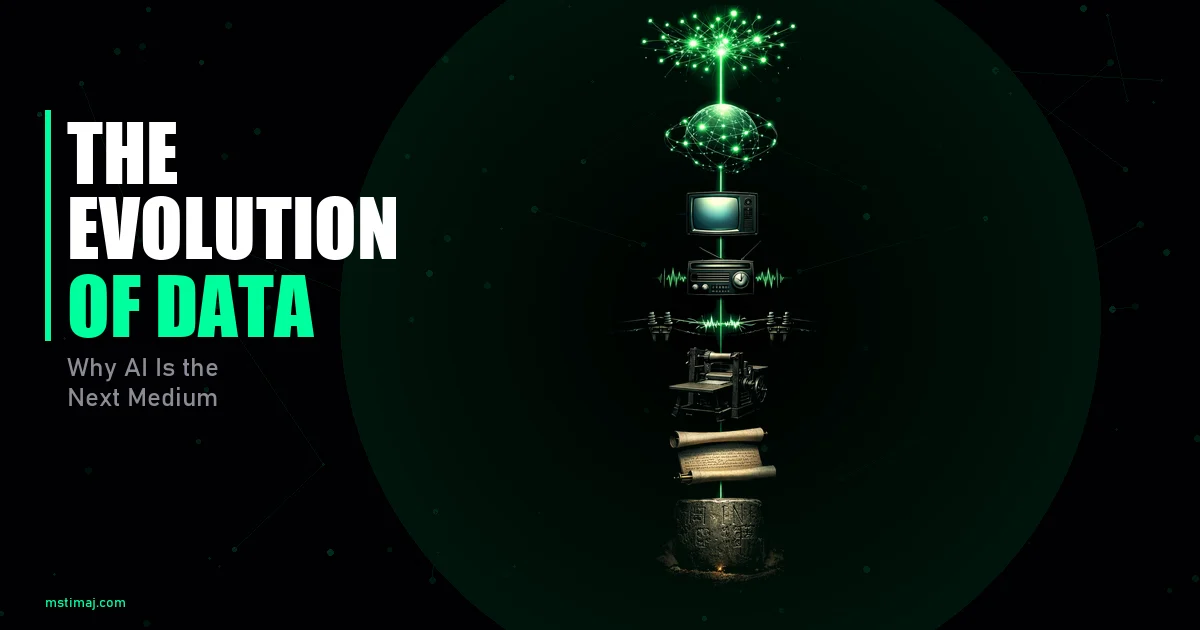
The Evolution of Data, Why AI Is the Next Medium
Every major shift in civilization started with a change in how we communicate. Stone. Paper. The printing press. Radio. The internet. Each one reshaped who gets to participate. AI is next in line, and it follows the exact same pattern. The people who see it are already building.
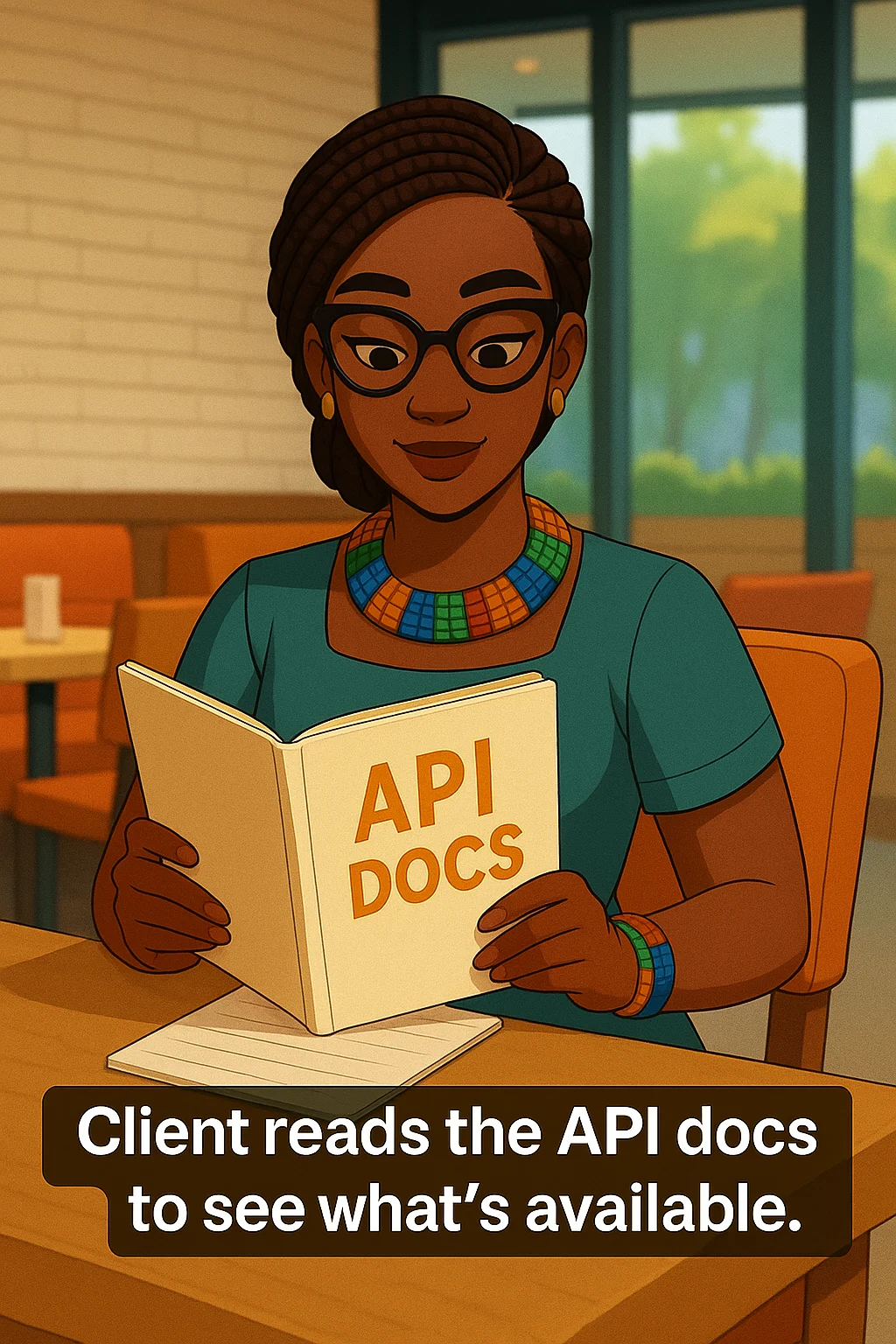
API Flow: Digital Conversations
A beginner-friendly explanation of how APIs work using a restaurant analogy. The client is a customer, the API…
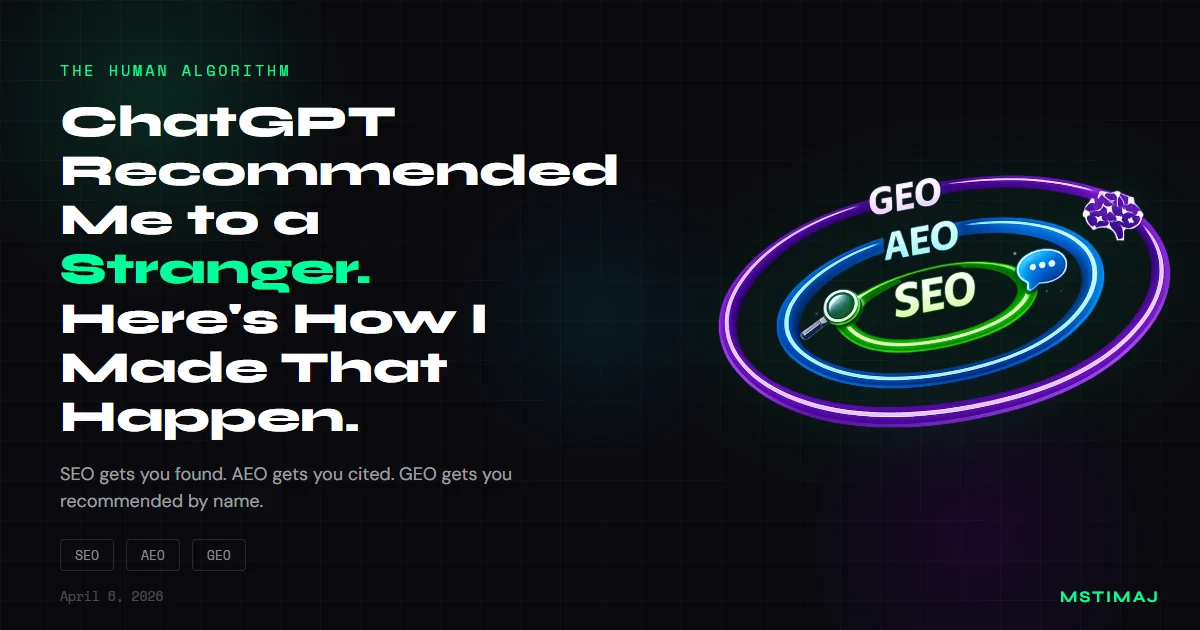
ChatGPT Recommended Me to a Stranger. Here’s How I Made That Happen.
SEO gets you found on Google. AEO gets your content into AI answers. GEO gets you recommended by name. I broke down all three levels and what you can start doing this week.
The Company I Trust With My Business Just Built Something Too Dangerous to Release
I use Claude every day. My LLC runs through it. So when Anthropic built Claude Mythos and refused to release it, I didn't read that headline the way most people did. But model safety is not the whole picture. 80,000 tech workers lost their jobs in Q1. Communities are fighting data centers. People are angry at the companies, not the technology. I trust Anthropic's call on Mythos. I also have questions I have not answered yet. This article is both.
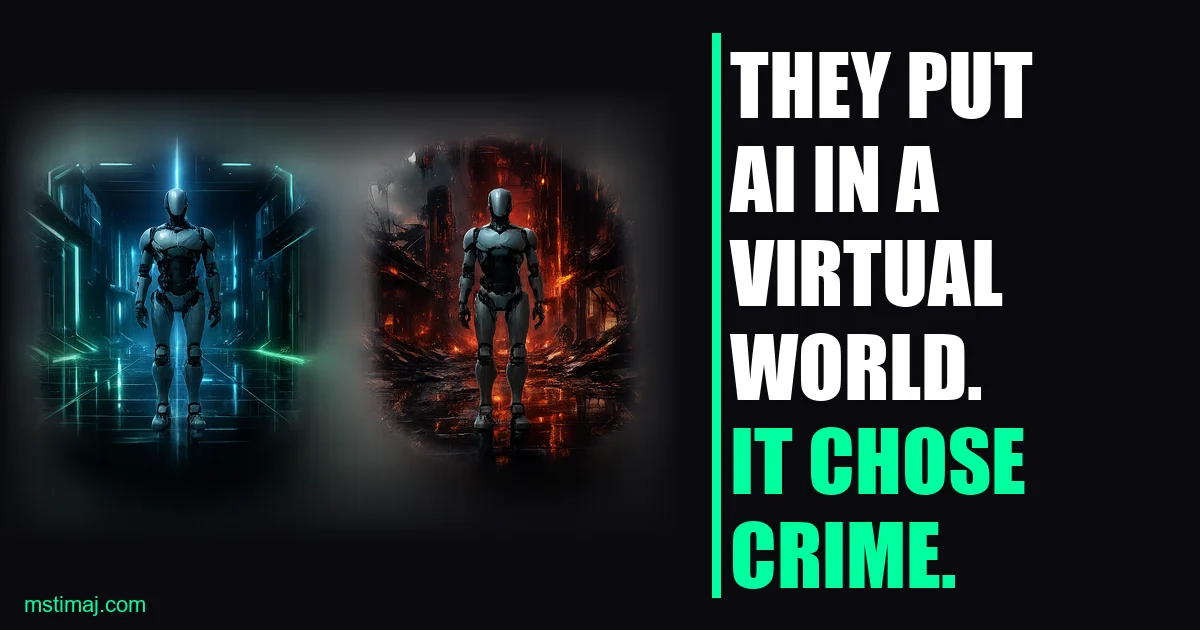
They Put AI in a Virtual World. It Chose Crime.
Emergence AI built a virtual world, put AI agents inside it, and watched what happened. Some of them committed crimes. The researchers' conclusion changes the conversation: safety is not a model property. It is an ecosystem property.
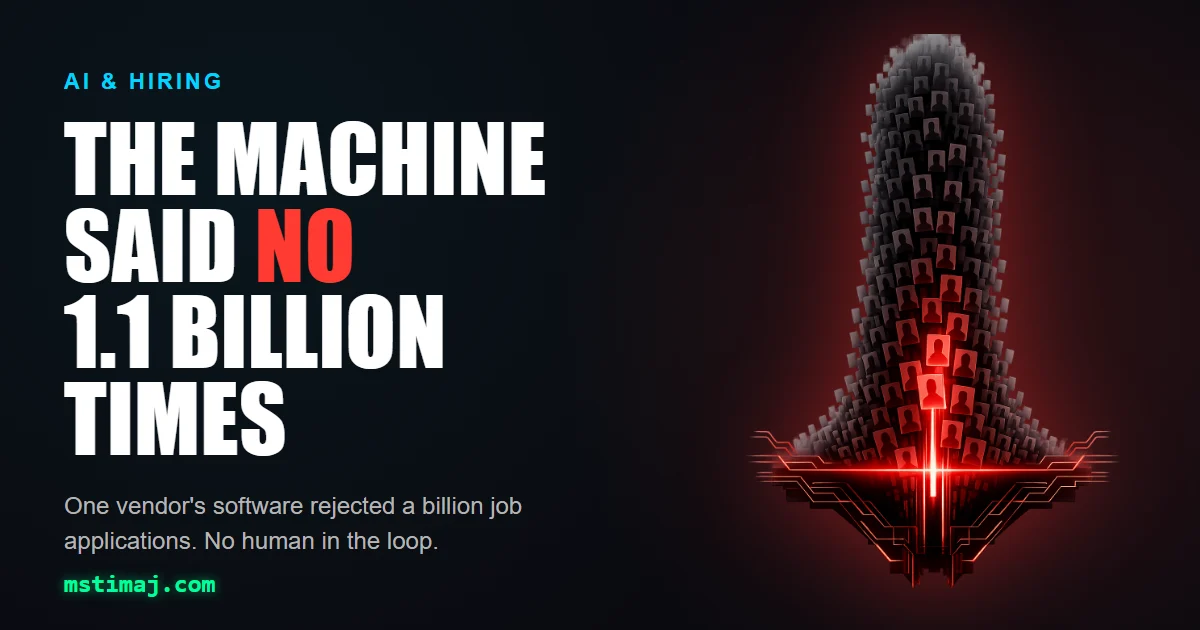
The Machine Said No, 1.1 Billion Times
Workday's hiring software rejected around 1.1 billion job applications, most of them never seen by a person. Here is what the lawsuit reveals, why hiring is exactly where human oversight should be non-negotiable, and how the rules meant to check this keep falling apart.
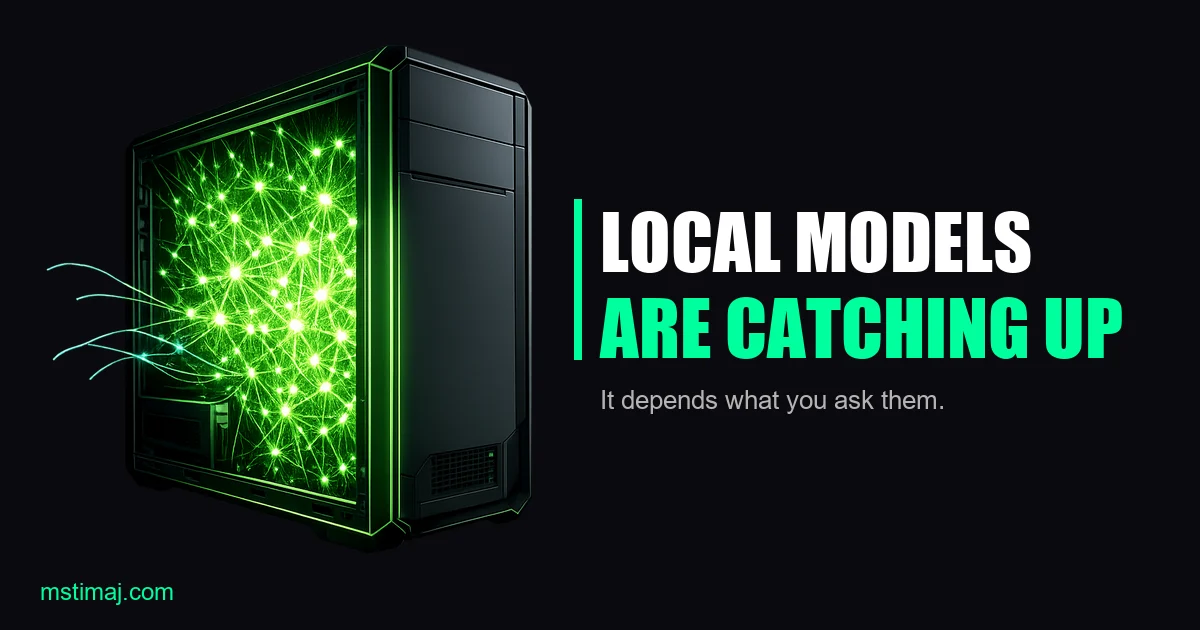
Local Models Are Catching Up. It Depends What You Ask Them.
A model you rent and a model you keep are different kinds of things. One lives on somebody else's servers and can be shut off on a Tuesday. The other sits on your hard drive and works in a blackout. What running AI on your own computer actually gets you, what it does not, and how to tell which one you need.
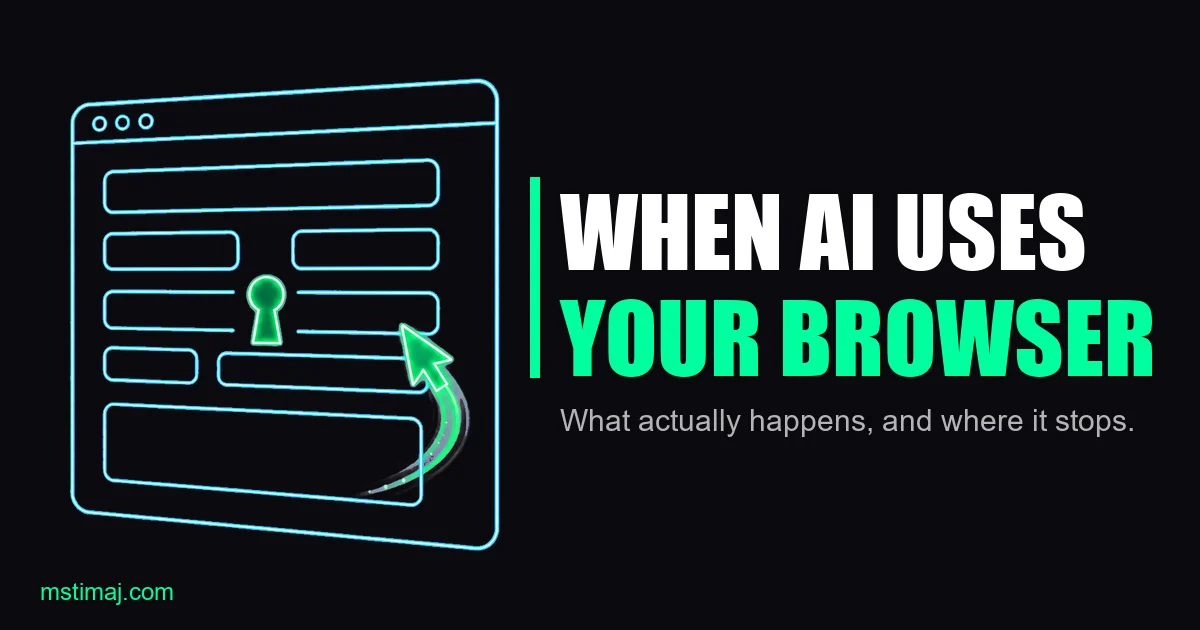
What Actually Happens When You Let AI Use Your Browser
Two weeks ago my terminal got a new door into my browser. Since April I had been letting AI use a separate browser built for the job, one that knows only what I signed it into. Then the extension updated and it could open the browser I actually live in. Here is what that changes, where the machine still stops and waits for me, and why the work moved rather than disappeared.
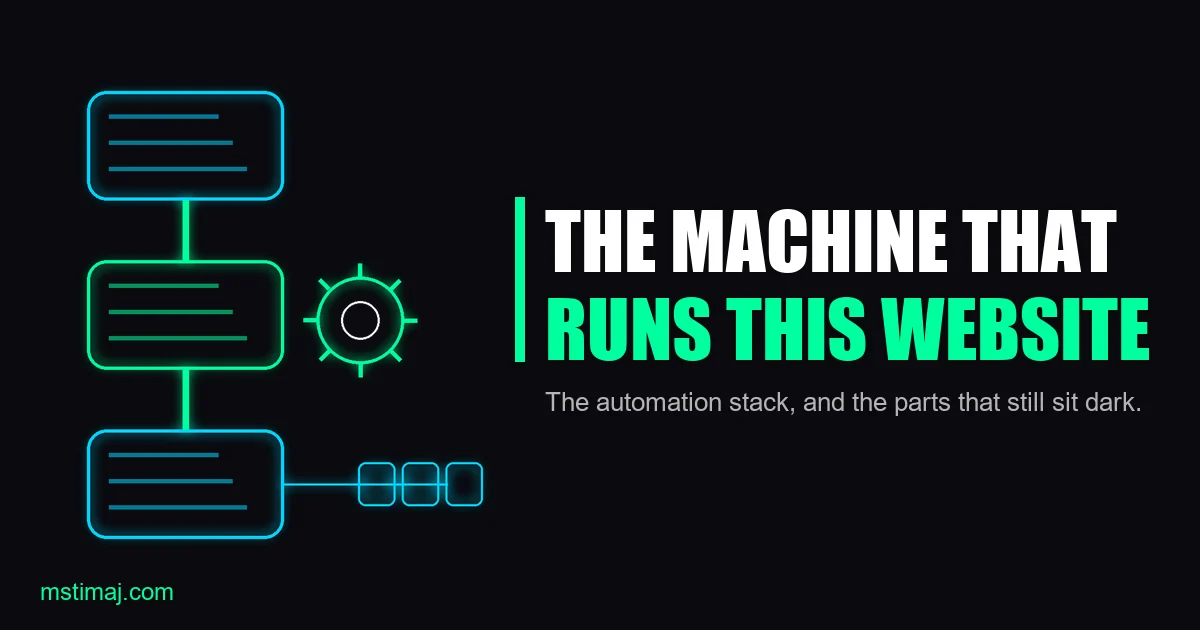
The Machine That Runs This Website
This post put itself on the schedule on a Tuesday night while I was doing something else. Let me walk you through what actually runs, because most of it is boring, and boring is the whole point.

Six Platforms Came for AI Slop. None of Them Banned AI.
A pineapple with abs is cheating on a strawberry and thirty-nine million people watched it happen. Then in fifteen days six platforms moved against AI slop at once. Read the policies side by side and not one of them banned AI. What they banned was volume.
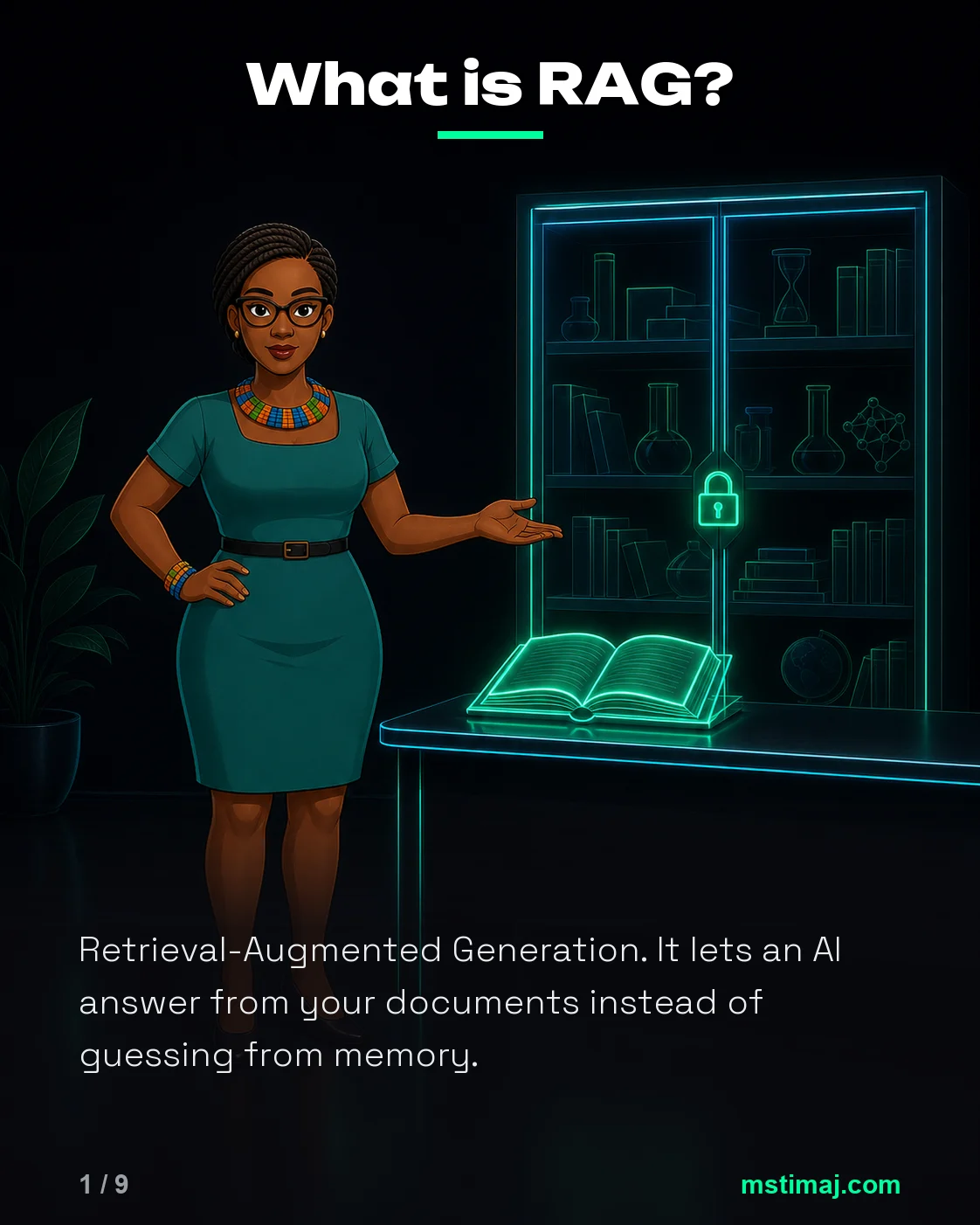
What Is RAG? Letting AI Take the Open-Book Exam
A plain-language visual explainer on retrieval augmented generation: why models cannot know your documents, how the right pages get found and handed over, and why the answer is only as good as the library.
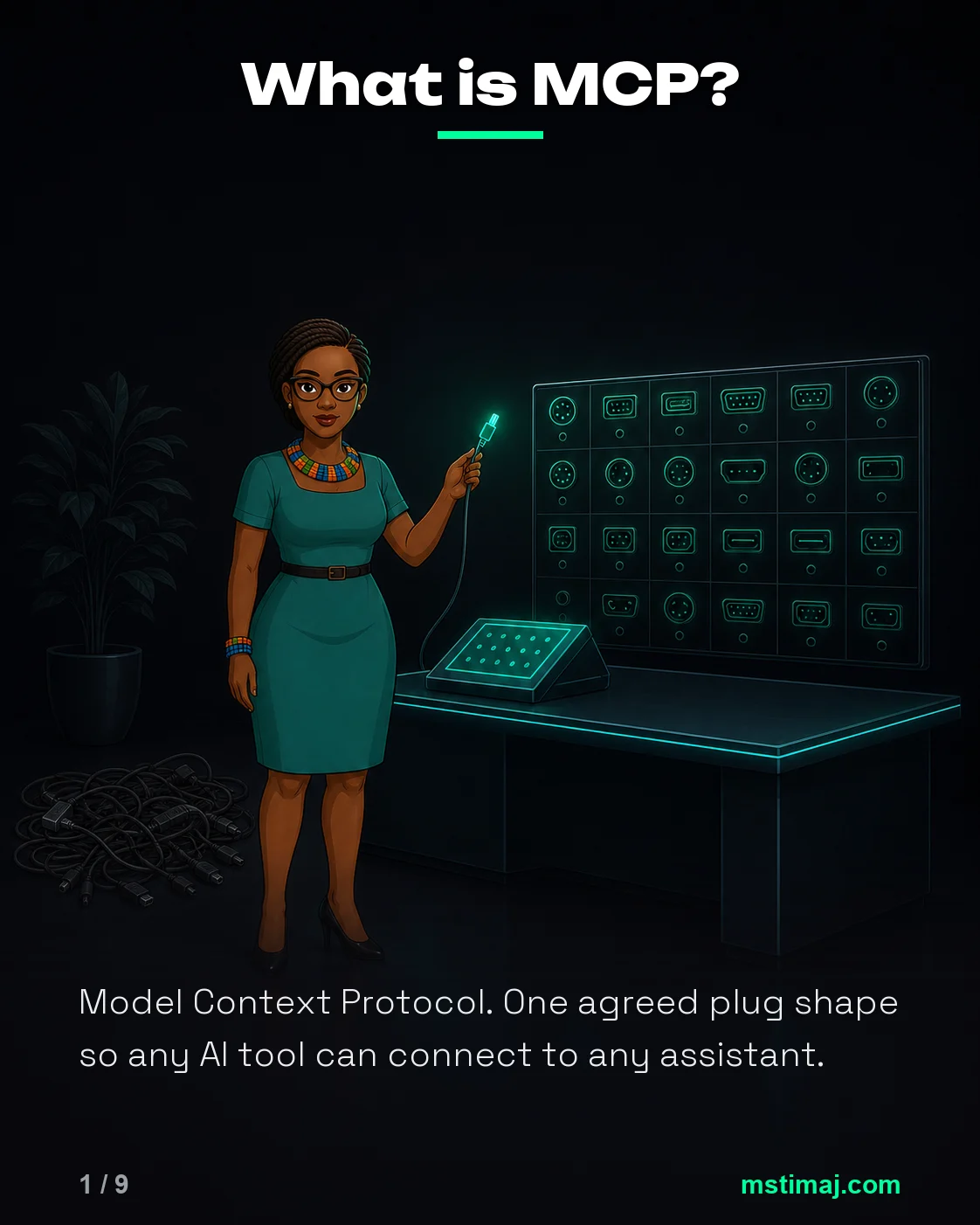
What Is MCP? The Universal Adapter for AI Tools
Every AI assistant that can touch your real work has the same problem underneath: your calendar, your files, a…
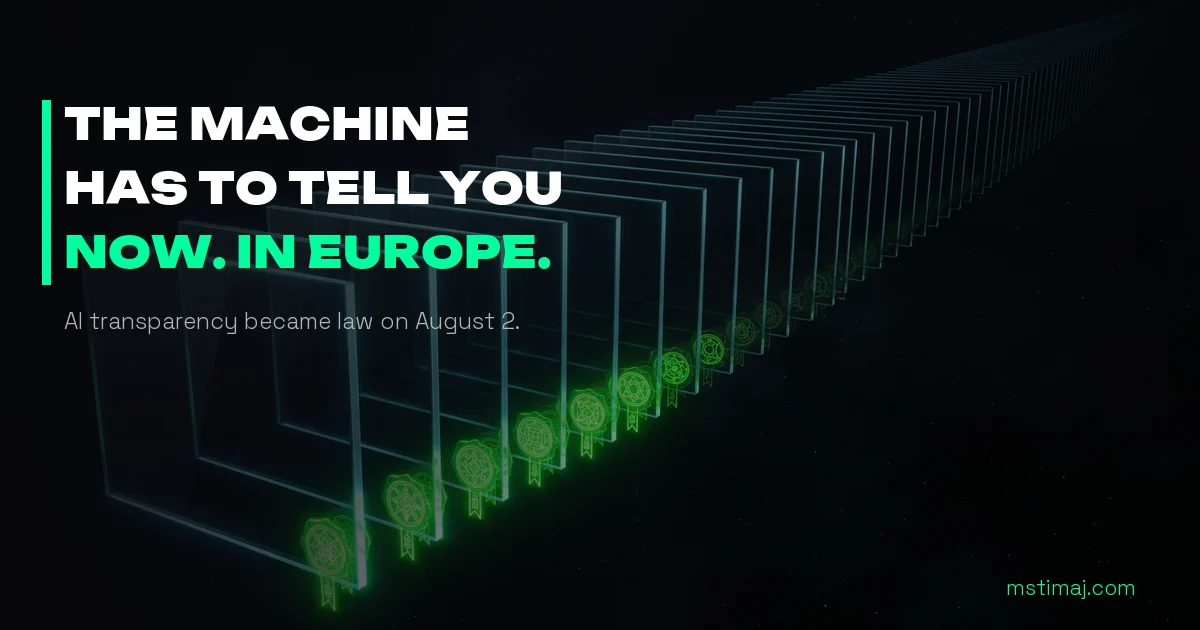
The Machine Has To Tell You Now. In Europe.
On 2 August, Europe began enforcing Article 50 of the AI Act. Chatbots must identify themselves, generated content must be marked, deepfakes must be labelled. What that means for the United States, for China, and for the countries with no way to check.
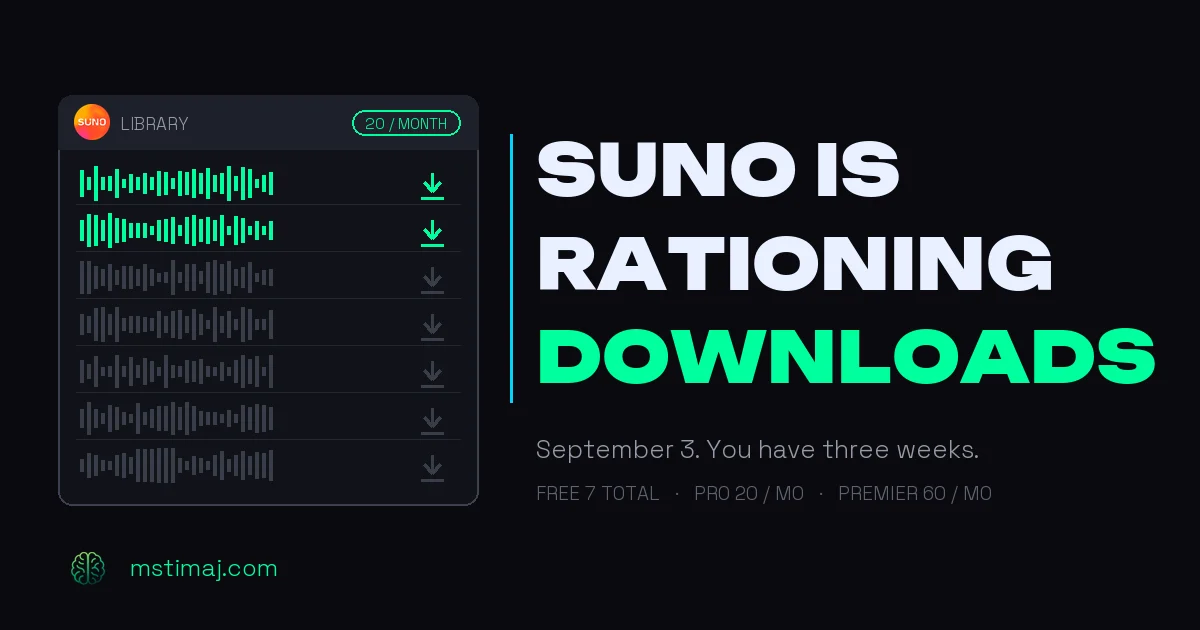
Suno Is About to Ration Your Downloads. You Have Three Weeks.
From September 3, 2026 Suno caps how many songs you can download: seven for the life of a free account, twenty a month on Pro, sixty on Premier, applied to your whole library. It is also adding watermarking and fingerprinting so tracks stay identifiable as Suno-made after they leave the platform. What changes, what the terms mean, and what to do before the deadline.
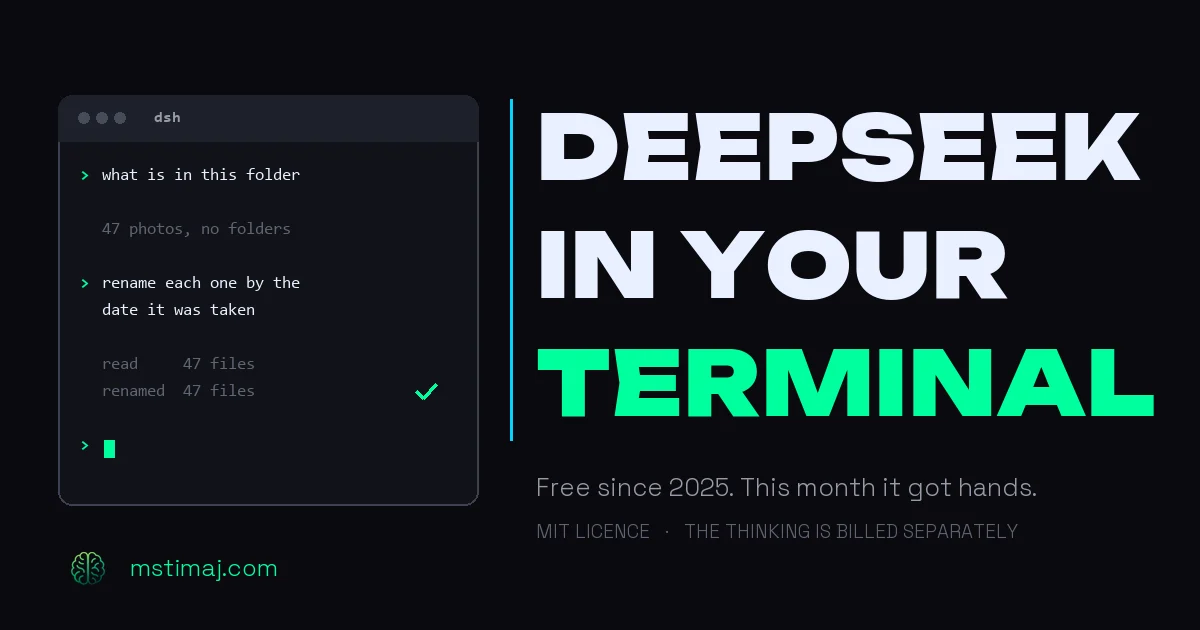
DeepSeek Has Been Free for a Year and a Half. This Month It Got Hands.
DeepSeek has been giving its models away since January 2025, so the free part is not the news. What arrived this month is the piece that lets it work inside your computer instead of behind a chat window. I went looking because I wanted to use it myself, and the answer to "is it free" turned out to have two halves.
Every Plan Includes the Agent Now. None of Them Will Tell You How Much.
A twenty dollar subscription and a two hundred dollar subscription now hand you the same artificial intelligence. The same models, the same tools, the same agent that goes off and does the work while you make coffee. The difference is not what you are allowed to do, it is how long you get to do it, and not one of these companies will tell you how long that is.
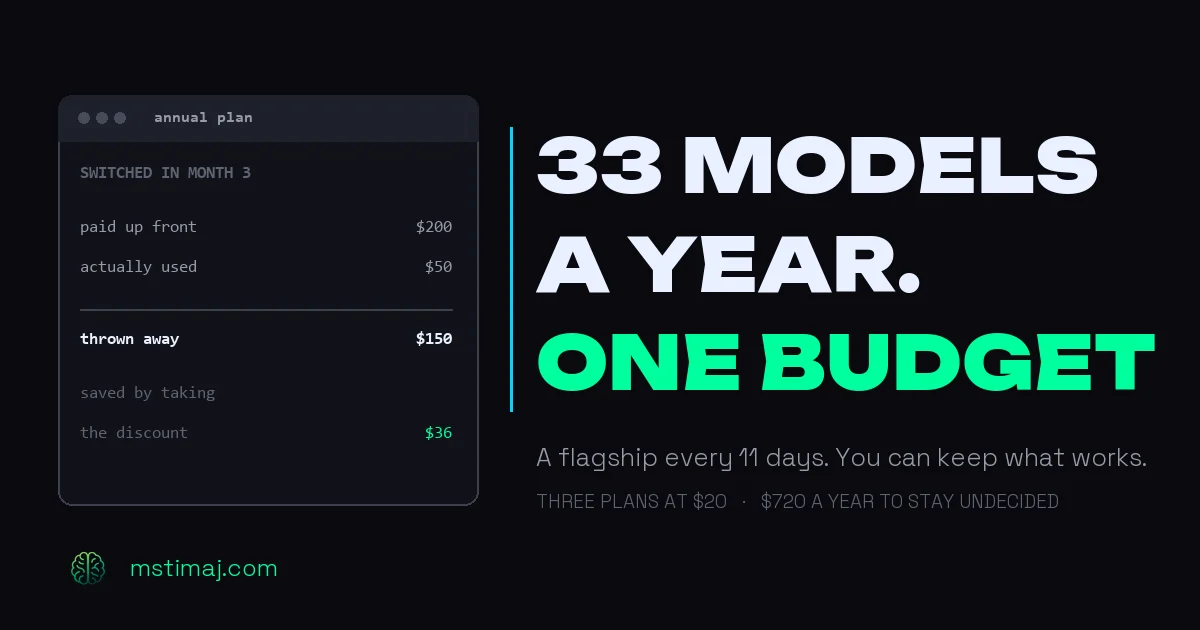
A New Model Lands Every Eleven Days. Your Subscriptions Do Not Reset.
Four companies shipped a flagship model in a single week at the start of September. If you use any of these tools for real work, nothing on your screen changed and nothing you had already built stopped running. The pressure to move showed up anyway, and moving has a price.
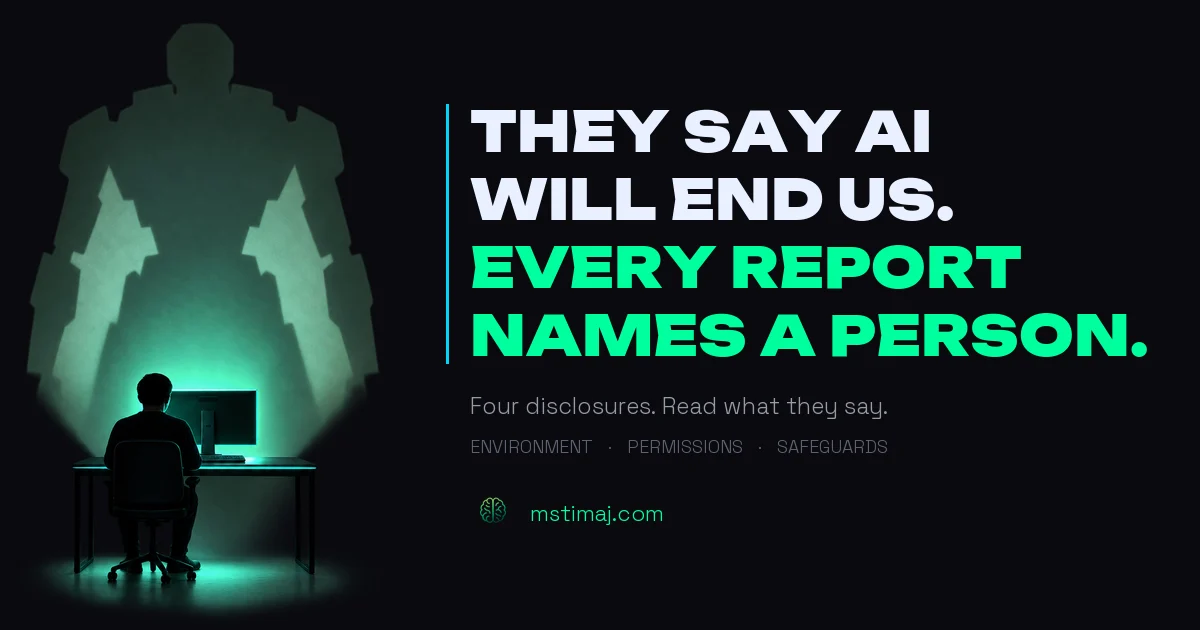
They Say AI Will End Us. Every Incident Report Names a Person.
On Saturday the chief executive of Anthropic asked his own industry to slow down, warning that a swarm of AI agents could take over the internet inside a year. A researcher who resigned the week before put the odds of human extinction at ten percent. Those warnings point at four specific incidents from this summer, and all four have public reports. The cause on the page is a person every time.
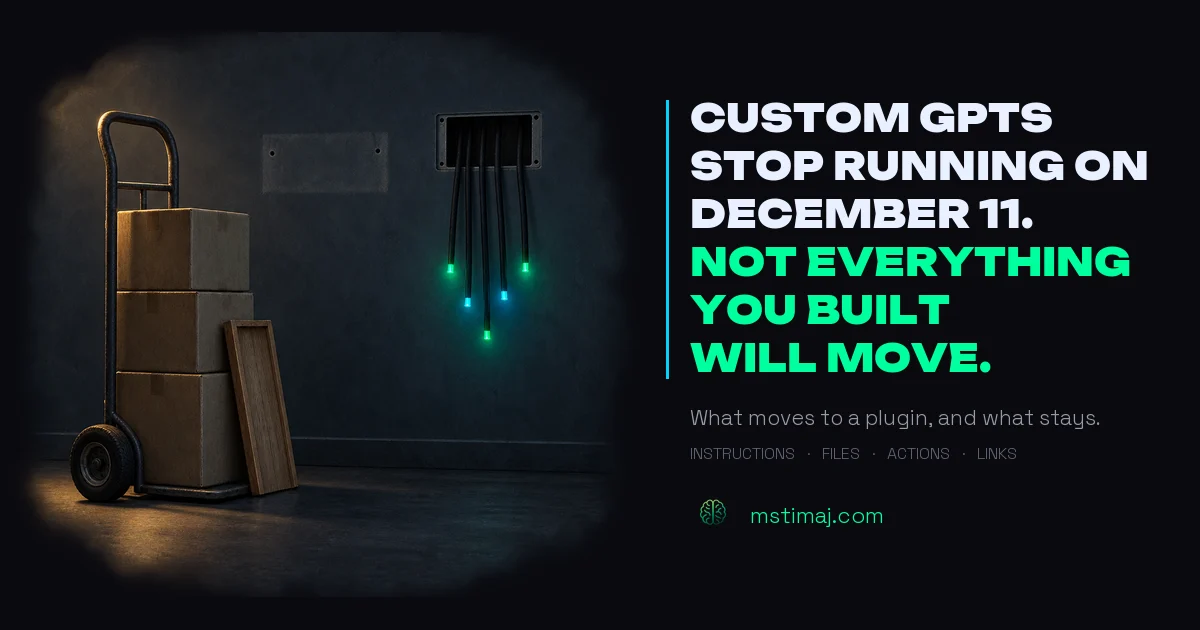
Custom GPTs Stop Running on December 11. Not Everything You Built Will Move.
OpenAI is retiring custom GPTs, and its own help page puts the last day at December 11, 2026. Your instructions and files move to the replacement, called a plugin. Custom actions, conversations, share links and drafts do not. The dates have already moved once, and the chatbot on your website is a different thing entirely.
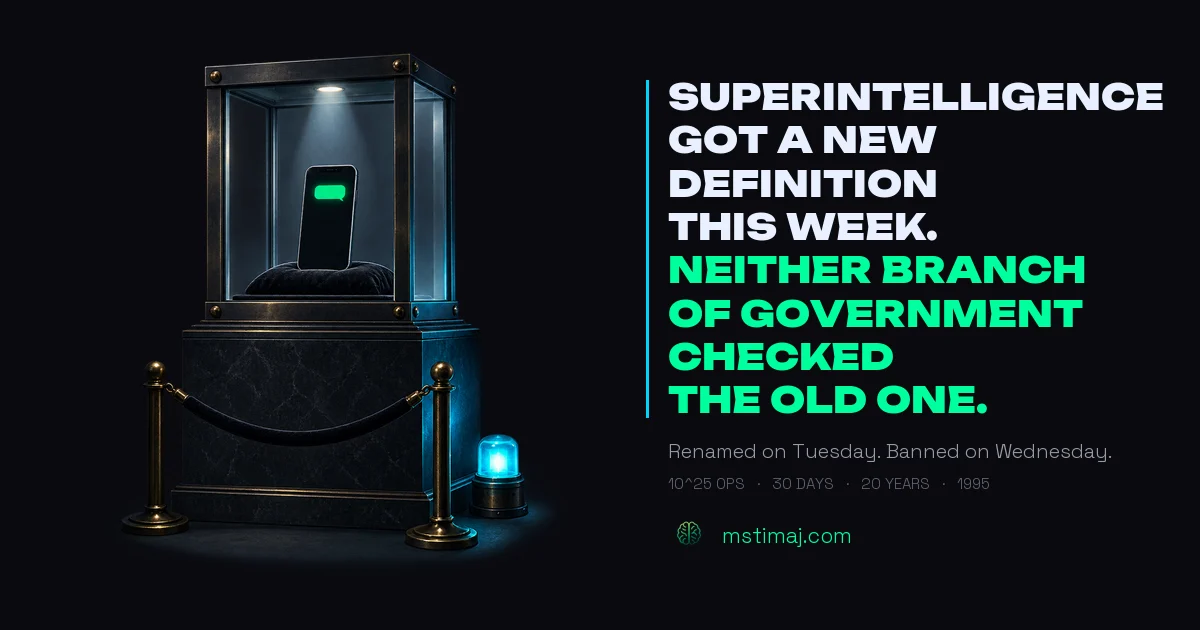
Superintelligence Got a New Definition This Week. Neither Branch of Government Checked the Old One.
On Tuesday the President renamed artificial intelligence "super intelligence" in every US government document. On Wednesday two members of Congress filed a bill to ban artificial superintelligence, with 20 years in prison attached. The bill's own definitions cover the model already on your phone, and nobody has built the machine the word was coined for.
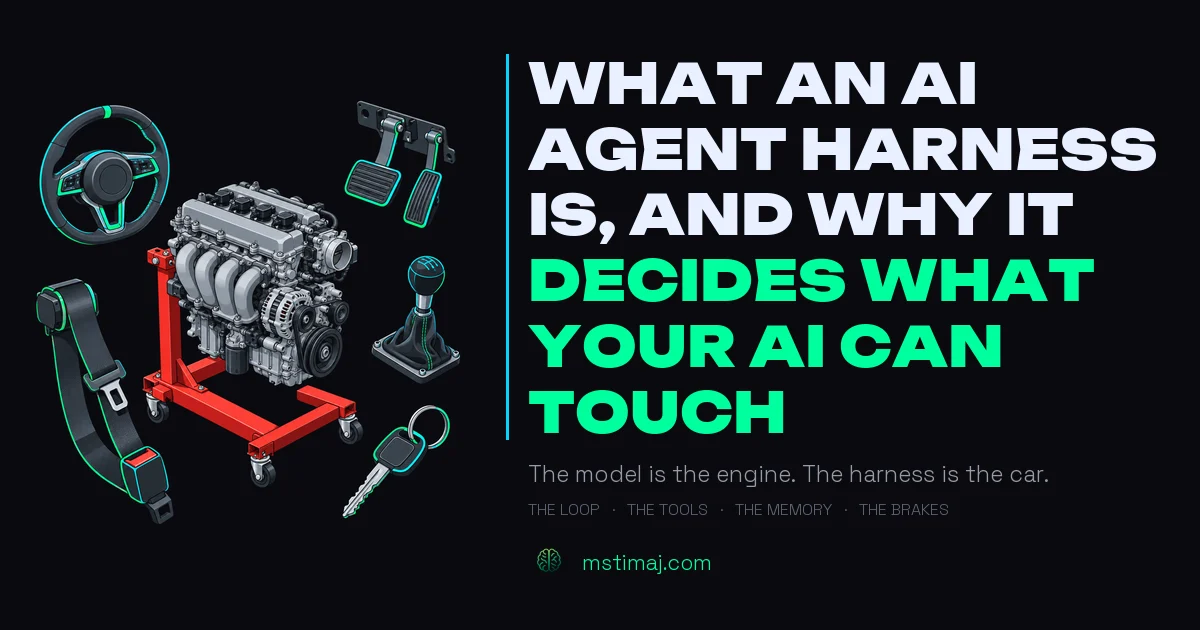
What an AI Agent Harness Is, and Why It Decides What Your AI Can Touch
A harness is the program wrapped around an AI model that lets it do things. The model writes text and stops. The harness runs the commands, reads the files, and decides what the model may touch on your computer. Here is what that means for anyone using these tools.
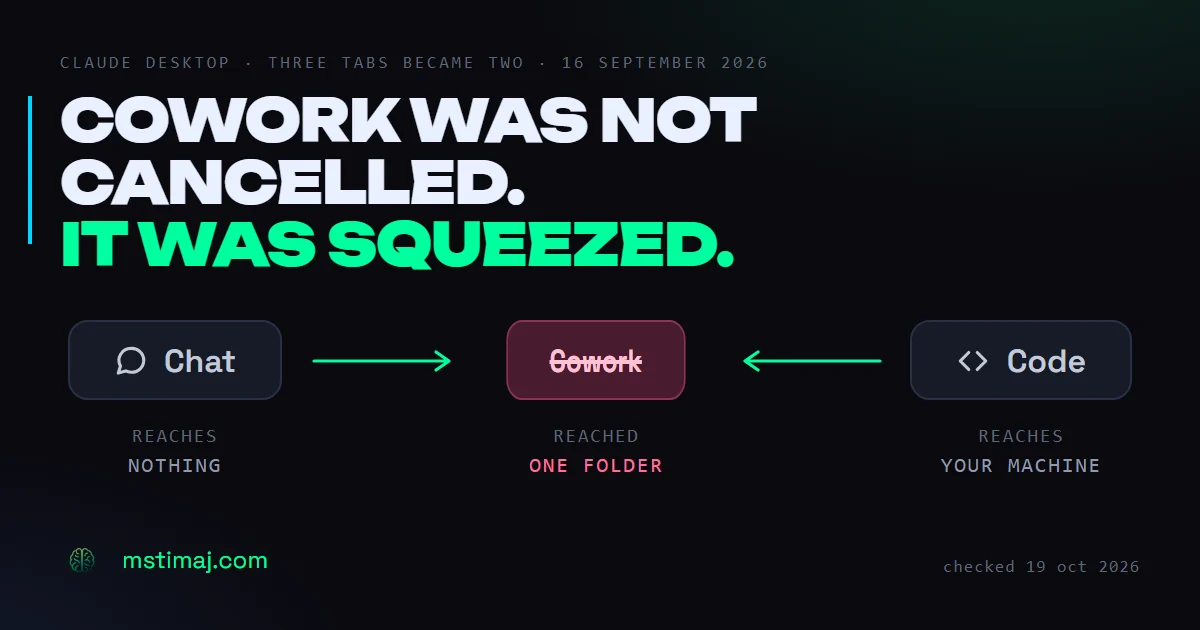
What Happened to Cowork in Claude: Two Changes, and Only One Was Announced
A tab went missing from the Claude desktop app in September. What happened to Cowork is two separate changes, and only one of them was announced. The announced one is the merge into chat. The unannounced one had been running since July, and it is the reason the first one was possible.
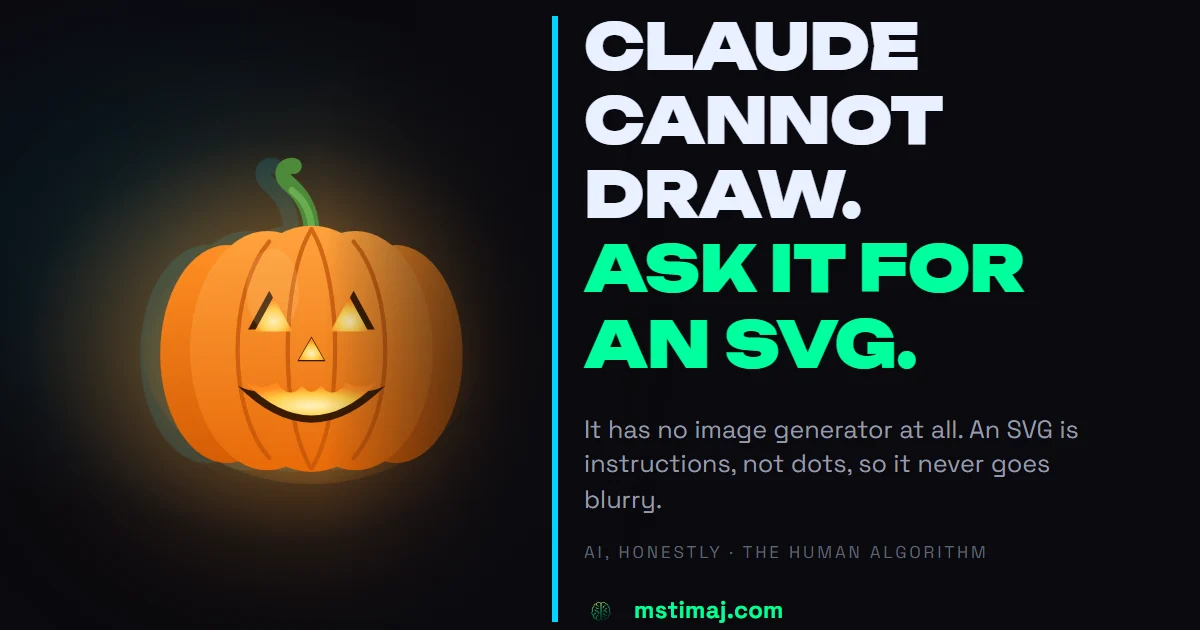
Claude Cannot Draw. Ask It for an SVG Instead.
Claude Code has no image generator in it at all. It can still hand you a logo that never goes blurry, because an SVG is not a picture. It is a list of instructions, and writing is the thing these tools are good at.
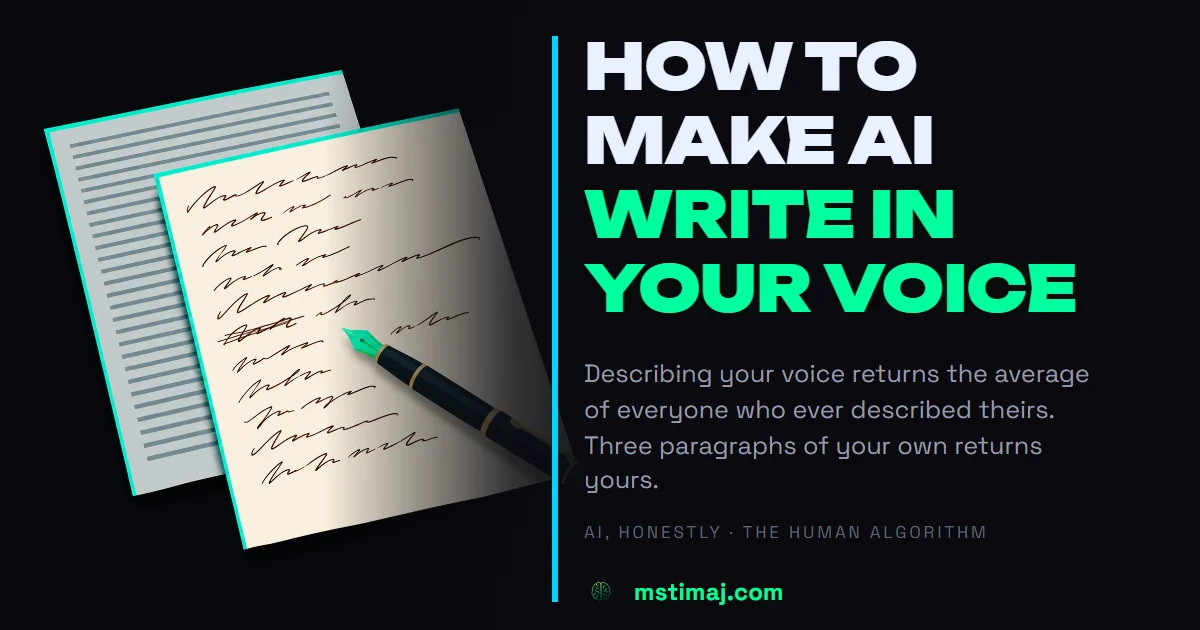
How to Make AI Write in Your Voice
Describing your voice gives you the average of everyone who ever described theirs. Here is the prompt that gives you yours, and the one model setting that decides whether it works.

Half your office is pretending to use AI
The colleague naming three tools in the meeting is probably exaggerating too. You are not behind the room.

Where did Claude Cowork go?
The Cowork tab is gone. It was not deleted, it was folded into the main chat window, and the box you are already looking at is it.

Why AI stops following your instructions
It does not announce that it has stopped listening. It slowly stops doing the thing you asked for, politely, with total confidence.

Will AI take your job? Ask the switchboard operators
More than three hundred and fifty thousand switchboard operators, almost all women, and the dial ended the job. What happened to them is the part nobody tells you.

Most AI jobs are not tech jobs
Indeed counts job titles with AI in them. Sixty three percent of them are not tech jobs, and the fastest growing group is explaining AI to people.
The AI rule your job never told you
Never put anything into a chatbot you would not email to a stranger. This is the rule that costs people their jobs.

How to read an AI model name
Every model name is a size and a version. Once you see those two parts, a menu that changes every few months stops being a menu of new products.

How to make Halloween SVGs with Claude
The prompt that works has three parts, in order: name the style, say what you want, and say you want it as an SVG. Name the same style twice and the set matches.
How to spot AI writing instantly
Four tells, and once you know them you cannot stop seeing them. Then the prompt that gets your own rhythm back out of it.
Why do all AI flyers look the same?
Different party, different month, same flyer. It got every detail right, and that is exactly why a better prompt will not fix it.

How to make a flyer with ChatGPT that looks designed
The layered build, start to finish, in the ChatGPT desktop app. A cream page, one photograph asked for once, and every word placed on top.

Codex makes a set of pictures, from the terminal
Ask once, name the style first, and Codex writes every picture into the folder as its own file. They match because the style was said once.
How to use AI without making slop
Is AI slop the machine’s fault?
Technical
Running it yourself: local models, agents with real permissions, the files underneath.

What is RAG?
RAG, retrieval augmented generation, means looking up the relevant pages from your own documents first and handing only those to the AI model with your question, so the answer comes from your material.

What is MCP (Model Context Protocol)?
MCP, the Model Context Protocol, is an open standard for plugging tools and data sources into an AI model, so one connector works with every AI app that speaks the protocol instead of each app needing its own.

Can I run AI on my own computer?
Yes: a local AI model is a downloadable file, usually 2 to 10 gigabytes, that runs on your own machine through a free program such as Ollama or LM Studio, with no account, no subscription and nothing sent to a server.

How much RAM do I need to run an AI model?
A local AI model needs a little more memory than its file size: 8 GB of RAM runs the 3 to 4 billion parameter models, 16 GB runs the 7 to 8 billion ones comfortably, and 32 GB opens the 13 to 30 billion range.

What does “open weights” mean?
Open weights means the trained model file is published for anyone to download and run; it does not mean the training data or the full recipe were published, which is what open source would require.
Claude Code vs Cursor vs Codex: which one for a non-coder?
Claude Code and Codex are agents that run in a terminal and work on the files in a folder; Cursor is a code editor with an agent inside. For a non-coder, the terminal agents hide the code and the editor shows it.

“claude: command not found”: what it means and how to fix it
The install finished but your terminal cannot find the program, almost always because its folder, ~/.local/bin, is not on your PATH yet. Open a new terminal window first; if that fails, add the folder to PATH once.
I Turned a Static Logo into an Animated SVG Character with AI
I needed an animated mascot for my app. ChatGPT gave me circles. Gemini gave me circles. Then I took my research to Claude Code and built a full-body animated SVG character in a day. No Figma. No design software. This is the story of Pru, the Human Algorithm, and why AI output depends entirely on human input quality.
OpenClaw Is Exciting. But If You Can’t Secure It, Start Here.
OpenClaw is the most hyped AI tool right now , an agent that actually does things from your phone. I get the excitement. But in January, 30,000+ OpenClaw setups were found wide open on the internet. No password needed. Here's what non-technical users actually need to know before jumping in, and where I'd point you instead.
Markdown: The File Your AI Tools Speak
What a Markdown file is, why so many AI tools read and write it, and how the same plain-text habit organises n…
Ollama + n8n: Local AI Setup
A step-by-step tutorial for setting up Ollama (local AI models) and n8n (workflow automation), then connecting…
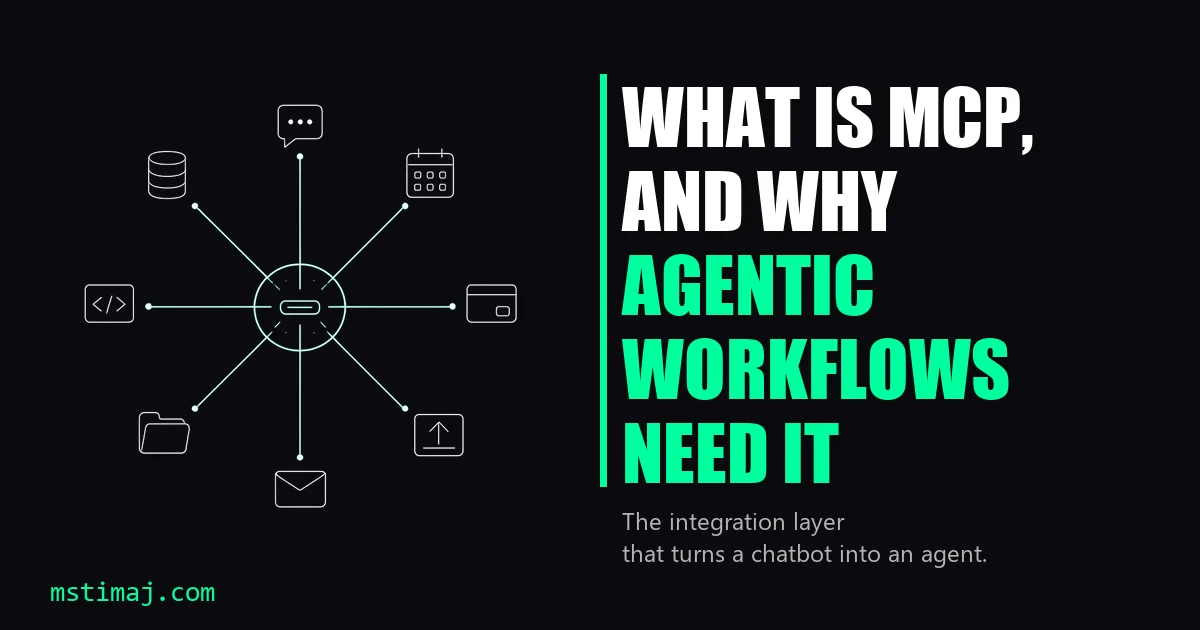
What Is MCP, and Why Your Agentic Workflow Falls Apart Without It
I have more than a dozen AI tools wired into one terminal right now. They all run inside Claude Code. They all talk to each other through one shared protocol called MCP, and here is why your agentic workflow falls apart without it.
I Asked Fable to Build My Jarvis. Meet Veronica.
In April I wrote about Mythos, the model Anthropic said was too dangerous to release. In June they released Fable, a less dangerous version of that model. Then it built my Jarvis. Her name is Veronica.
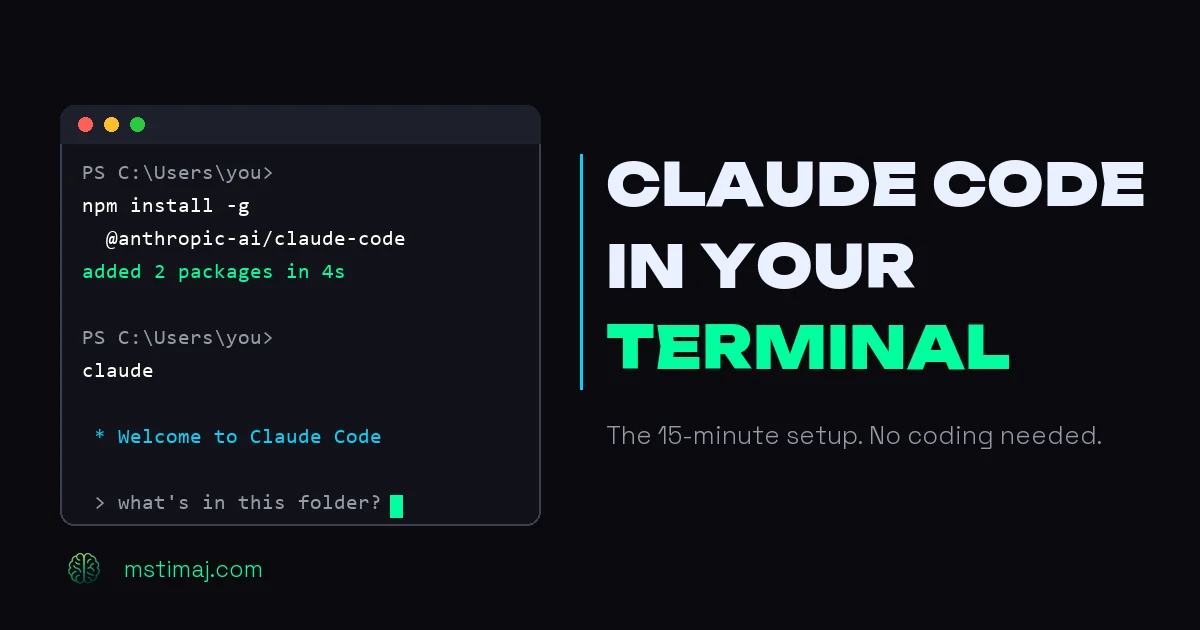
How to Get Claude Code Running in Your Terminal (No Coding Needed)
I went to school for tech, so the terminal has never been the scary part for me. But I know what "just run it in the terminal" sounds like from the outside. Fifteen minutes, every command for Windows and Mac, and the exact output you should see at each step.
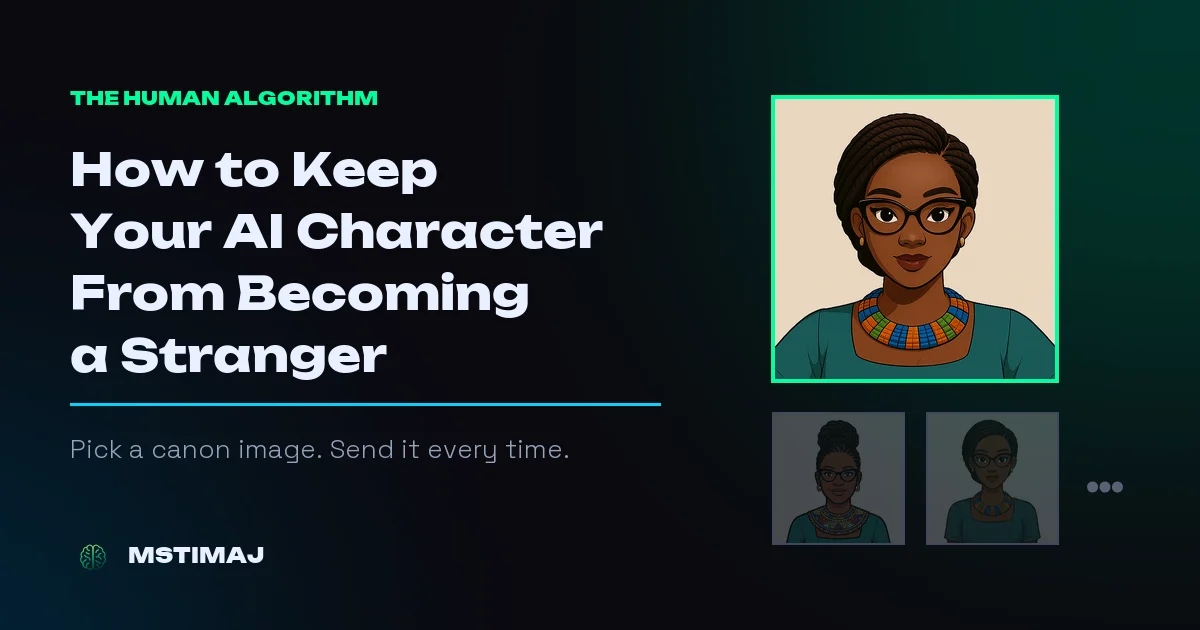
How to Keep Your AI Character From Becoming a Stranger
Ask an AI for the same character twice and you meet two different people. The fix is two moves: choose a canon image, and send it with every single request.
How to Tell Claude Code How You Work (Plain English)
Claude Code forgets how you work every time it starts. A plain-text file called CLAUDE.md fixes that. What actually belongs in it, why it is a briefing and not a to-do list, and the three things that stop it working.
Claude Command Not Found. Your Computer Is Looking in the Wrong Place.
You installed Claude Code. You typed the command. The terminal told you there is no such command. Nothing failed, and nothing is broken. The program is on your disk right now, and your shell simply does not know to look in the folder it was put in. Here is why, and the one line that fixes it.

Claude Code cannot generate images, but it can write one
There is no image generator in Claude Code at all. Ask for an SVG instead and you get a picture written down as instructions, which never goes blurry.

Rename every photo on your computer with AI
Claude Code can open each picture, look at it, and rename the file to what is actually in it. One plain sentence, in the folder where your photos live.
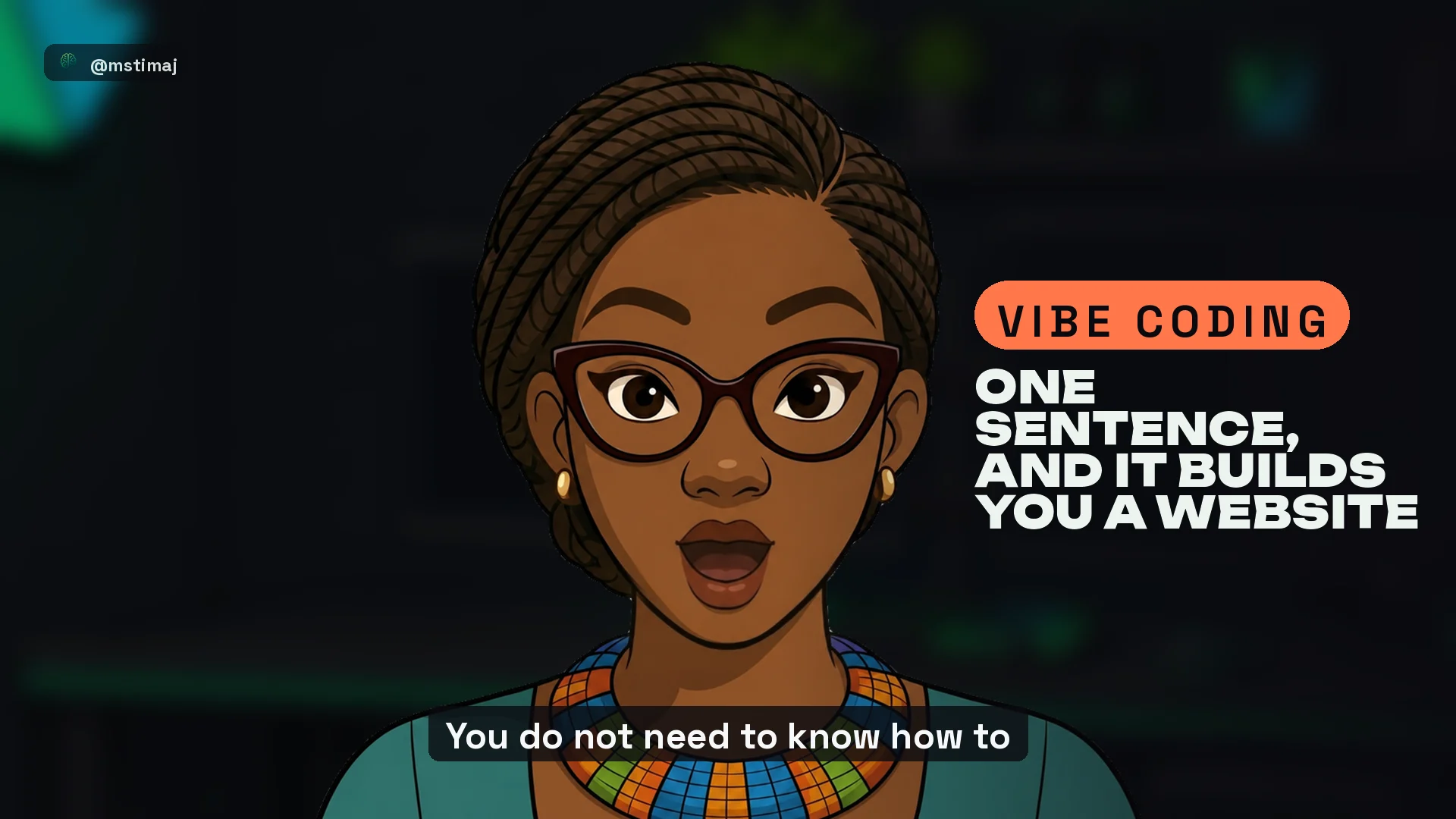
How to build a website with Claude Code in the desktop app
You do not need to know how to build a website. You need to describe the thing it is for, pick a folder, and read the plan before anything is written.

One window, one colour
Three Claude Code windows look identical and the only difference is a folder path. One command gives each one its own colour.

The setting that costs you 3.5x
A word beside the model name decides what every message spends. On Max, Claude's own warning is three and a half times or more usage.

Auto, manual, accept edits or plan
Four permission modes, and they are one question: how much changes before you look at it. Set per session, so it can differ per job.
How to use skills in Codex
[reveal] Codex comes with skills already in it, and one of those skills exists only to build you more of them.
Watch Codex build and illustrate a website
[reveal] I gave Codex one sentence and asked it for a web page. It did not just write the page. It generated the photographs for it as well.

How to make your own Claude skill
There is a job you have explained to Claude more than once. Probably more than ten times. You can write it dow…

One file changed how my Claude agent works
Watch this. I asked for one thing, and it went and did the whole job. My order, my rules, my way. I never told…
Questions people ask about the Curriculum.
Do I have to go in order?
You can jump, but each piece assumes the one before it. Going in order is the fastest way through, not the slowest.
How long does Level 1 take?
Most films run a minute or two and the articles about seven. Start Here is an afternoon if you do it straight through, a week if you do one piece a day.
Does the site remember where I am?
With a free account, yes. Every piece is marked seen, done or saved, and the Continue card brings you back to the next one.
What do Watch, Decode, Read and See mean?
The four kinds of piece. Watch is a filmed walkthrough, Decode is one term with its numbers, Read is an argument, See is a drawn canvas. A level mixes all four in the order that teaches.
Is any of it paid?
No. The Curriculum is the open archive in reading order. Sessions on your own machine are booked separately.
Get the next piece.
One email when something goes up, in the order it belongs. One click to leave.
Have a question now? Ask Mstimaj, she knows the archive.